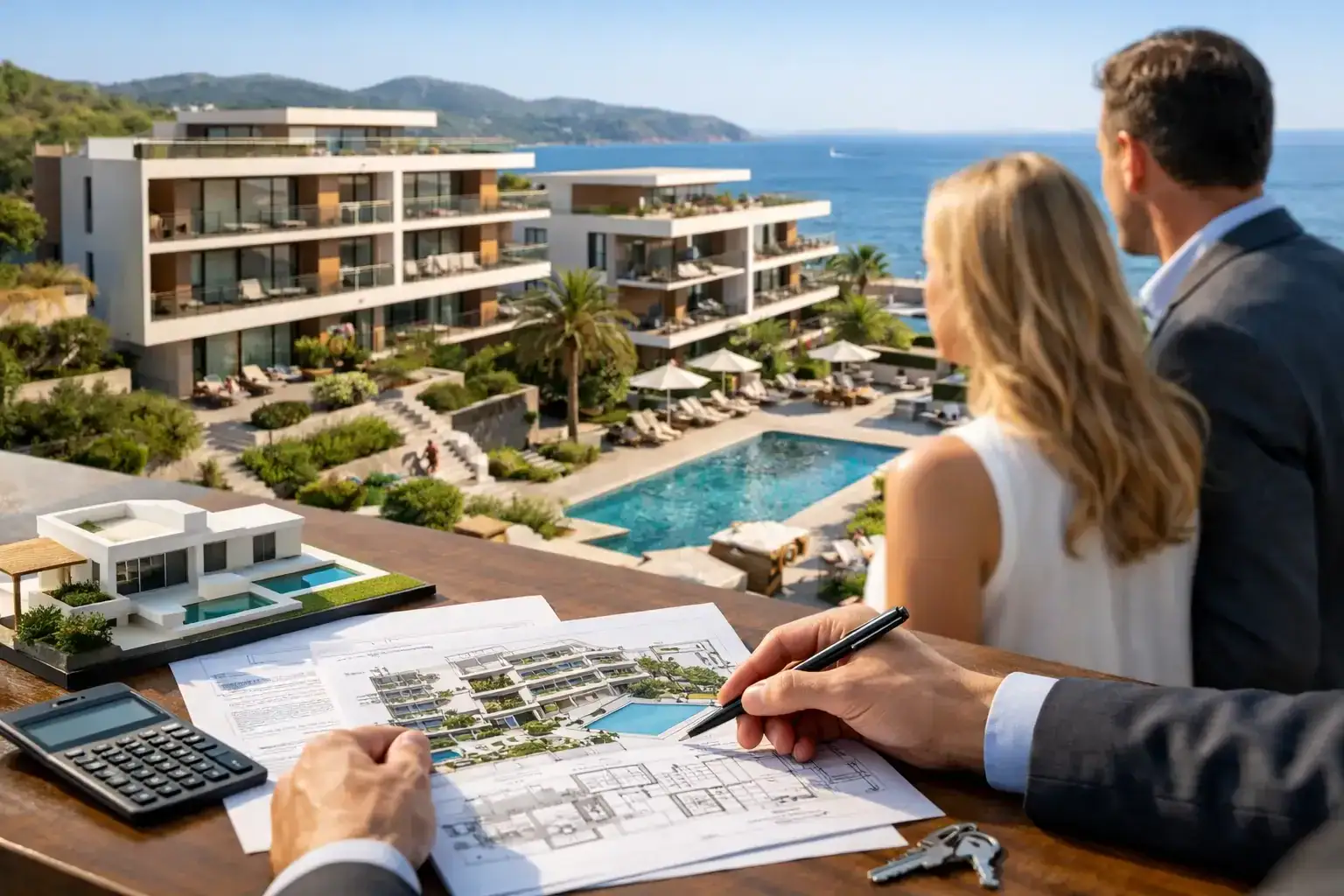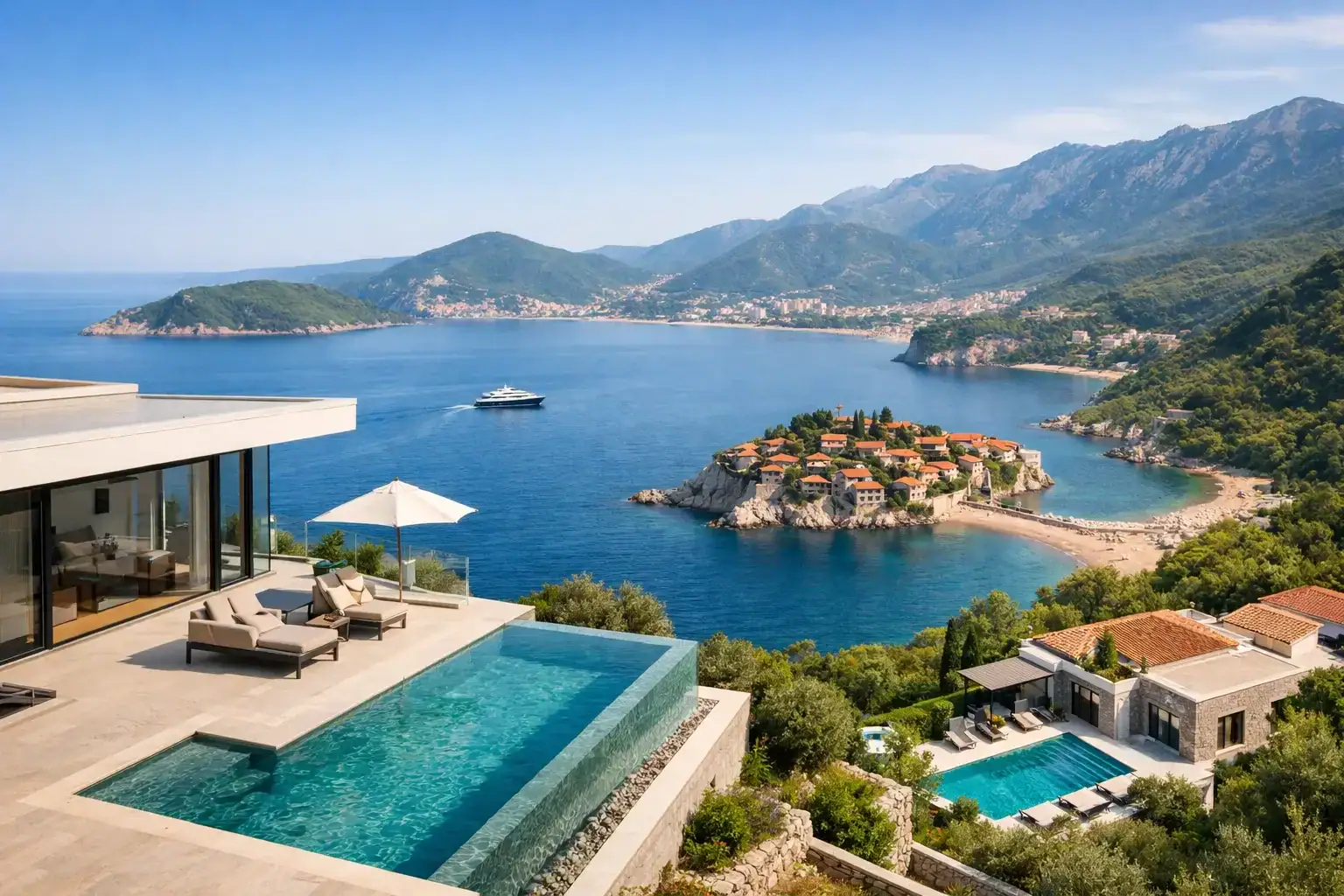


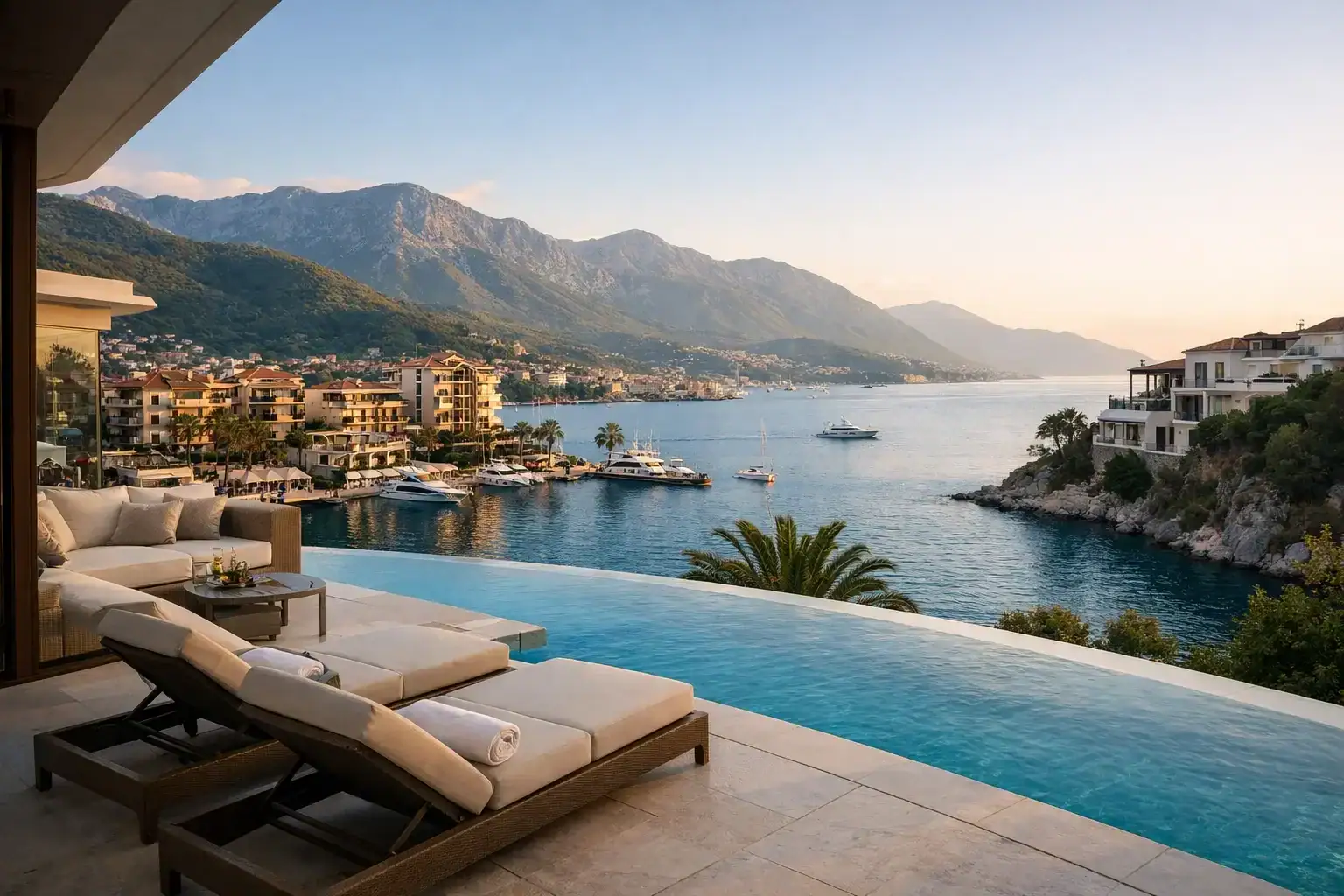
Buying a premium property rarely starts with just asking how many square feet you need. It begins with a decision about your lifestyle, capital preservation, and the quality of ownership you want for years to come. This guide to the premium property market will help you distinguish an attractive listing from a property that truly holds lasting value.
In Montenegro, the premium segment encompasses much more than just higher-priced real estate. These are residences in prime locations, apartments within meticulously managed complexes, villas offering privacy and quality infrastructure, as well as projects whose architecture, service, and management maintain their standard over time. The right decision, therefore, arises when the emotional connection to a space is confirmed by clear due diligence.
What distinguishes a premium property from a more expensive property
A high price in itself does not make a property premium. In the luxury segment, value is built through a combination of location, limited supply, construction quality, design, privacy, and how the property is maintained. An apartment with a view can be an exceptional opportunity, but only if the view is protected by zoning regulations, access is resolved, and the building has a management standard appropriate for the category in which it is being sold.
The premium market is particularly sensitive to details that often get overlooked in the mid-market. The quality of carpentry and insulation, ceiling height, orientation, number of parking spaces, direct elevator access to the apartment, reception, security, and availability of yacht or beach access can significantly impact both the daily experience and the future liquidity of the property.
Resort residences in zones such as Porto Montenegro, Luštica Bay In Portonovi, the buyer is not just purchasing a unit but also an curated environment. Services, amenities, upkeep of common areas, and the project's reputation directly impact value. On the other hand, standalone villa may provide more privacy and freedom, but it usually requires more engagement around maintenance and organization of services.
Guide to the Premium Real Estate Market: From Location to Value
The location is assessed more broadly than by sight.
A sea, marina, or city skyline view carries strong emotional value, but a serious location assessment requires a broader picture. Year-round accessibility, distance from the airport, privacy from neighboring plots, traffic during peak season, and future development of the immediate surroundings are important.
On the coast, the first row to the sea isn't always automatically the best option. Some properties closer to the shore are exposed to more traffic, noise, or limited privacy. A residence at a higher elevation, with an open view, good access, and enough space between buildings, often provides a higher quality of life and more stable demand. In Podgorica, premium value is more often determined by a quiet micro-location, proximity to business and educational facilities, building quality, and parking, rather than the central address itself.
Compare properties by actual, not just advertised, parameters
The asking price is a starting point, not a final estimate of market value. When comparing two properties, it's important that they truly have similar characteristics: the same micro-location, approximate year of construction, comparable level of amenities, view status, parking, and legal regularity. A square meter in a new complex with a reception and maintenance cannot be mechanically compared to a square meter in a building without those services.
Also pay attention to the usable area. Terraces, gardens, roof terraces, storage rooms, and garage spaces contribute differently to value, depending on location and quality of execution. For a villa, it is crucial to check the relationship between the size of the house, the plot, and privacy. An oversized building on a small plot may look impressive in photos, but it may not have the same market appeal in future sales.
The quality of the project is evident after the inspection.
The first tour should be organized without rushing. In addition to the interior, look at the common hallways, garage, facade, landscaping, and technical rooms when possible. It is precisely in these places that you can see whether the investor has thought about long-term standards or just about immediate presentation.
For a property under construction, the material specification, deadlines, payment schedule, and the investor's contractual obligations are as important as the renderings. For a completed property, the as-built condition, any owner interventions, heating and cooling system servicing, and maintenance costs are checked. A premium purchase does not mean every detail is risk-free, but rather that the risks are clearly identified and contractually controlled.
Documentation is the foundation of secure ownership
A property can be aesthetically flawless, but without proper documentation, it does not represent a secure investment. Before negotiating final terms, it is necessary to verify ownership, encumbrances, and restrictions, as well as the conformity of the actual condition with records and permits. This is particularly important for villas, land, buildings that have been extended, and properties purchased in the earlier stages of project development.
A fundamental legal and technical review typically includes:
- List of real estate and basis of ownership acquisition;
- existence of mortgages, encumbrances, disputes, or third-party rights;
- urban-technical conditions, permits, and object status;
- management, maintenance, and utilization agreements for common facilities;
- customs duties, transfer costs, and liabilities that may arise after purchase.
For foreign nationals The procedure may depend on the type of property, method of acquisition, and principle of reciprocity. Additional restrictions apply to certain categories of land and special use regimes. Therefore, the legal structure of the transaction should not be assumed based on general information, but verified for the specific property and specific buyer.
Investment potential without unrealistic promises
A premium property can be a second home, a residence for family life, a source of rental income, or a combination of these goals. Each requires a different choice. A buyer seeking a peaceful stay during the off-season may prioritize privacy and a larger square footage. An investor planning for tourist rentals might find project management, standardized service, project positioning, and ease of booking more important.
Rental income should never be viewed solely through the number of nights and the maximum seasonal price. A realistic projection includes off-season occupancy, commissions, management fees, cleaning costs, insurance, maintenance, equipment depreciation, and tax obligations. A property with a more moderate gross income but reliable management and lower operating expenses can sometimes be a better investment than a property with an attractive but difficult-to-achieve projection.
Liquidity is the second important criterion. Properties with a clear identity sell the easiest: good address, functional layout, good view or access, clean documentation, and a standard that doesn't quickly become outdated. A specific design can be an advantage, but too many personal or unusual solutions can narrow the pool of future buyers.
How to negotiate in the premium segment
Negotiation is not just about lowering the price. In a well-structured transaction, payment terms, inventory, parking spaces, completion of works, warranties, rectification of identified defects, and the moment of handover are also negotiated. For real estate under development, clauses that protect the buyer if deadlines or specifications change are particularly important.
The best negotiating position comes from preparation. When a buyer knows what realistic alternatives are on the market, which elements justify the price, and where there are open questions, it's easier for them to make a decision without unnecessary pressure. Accepting terms too quickly can be costly, but insisting on every detail at any cost can jeopardize an opportunity for a rare property. The balance depends on whether you are buying a unique residence or a property for which there are comparable alternatives.
Partner leading the process, not just a tour
In the premium segment, discretion, speed, and verified information have special value. An experienced intermediary helps narrow down choices before viewings, contextualizes the price within the market, and ensures legal, technical, and negotiation steps are taken in a coordinated manner. This is particularly significant for buyers living outside of Montenegro or those who wish to complete a purchase efficiently, without improvisation.
Nekretnina.me approaches purchasing as a process where both the client's time and capital are preserved. A truly premium property is not just one that makes a strong first impression, but one where even after a detailed inspection, you still feel you've made a calm, well-considered decision.
When you find a property that suits your life or investment strategy, don't rush to assess it with just a glance and emotion. Give equal weight to location, documentation, maintenance, and exit value. This way, a property with character also becomes a property with a clear future.