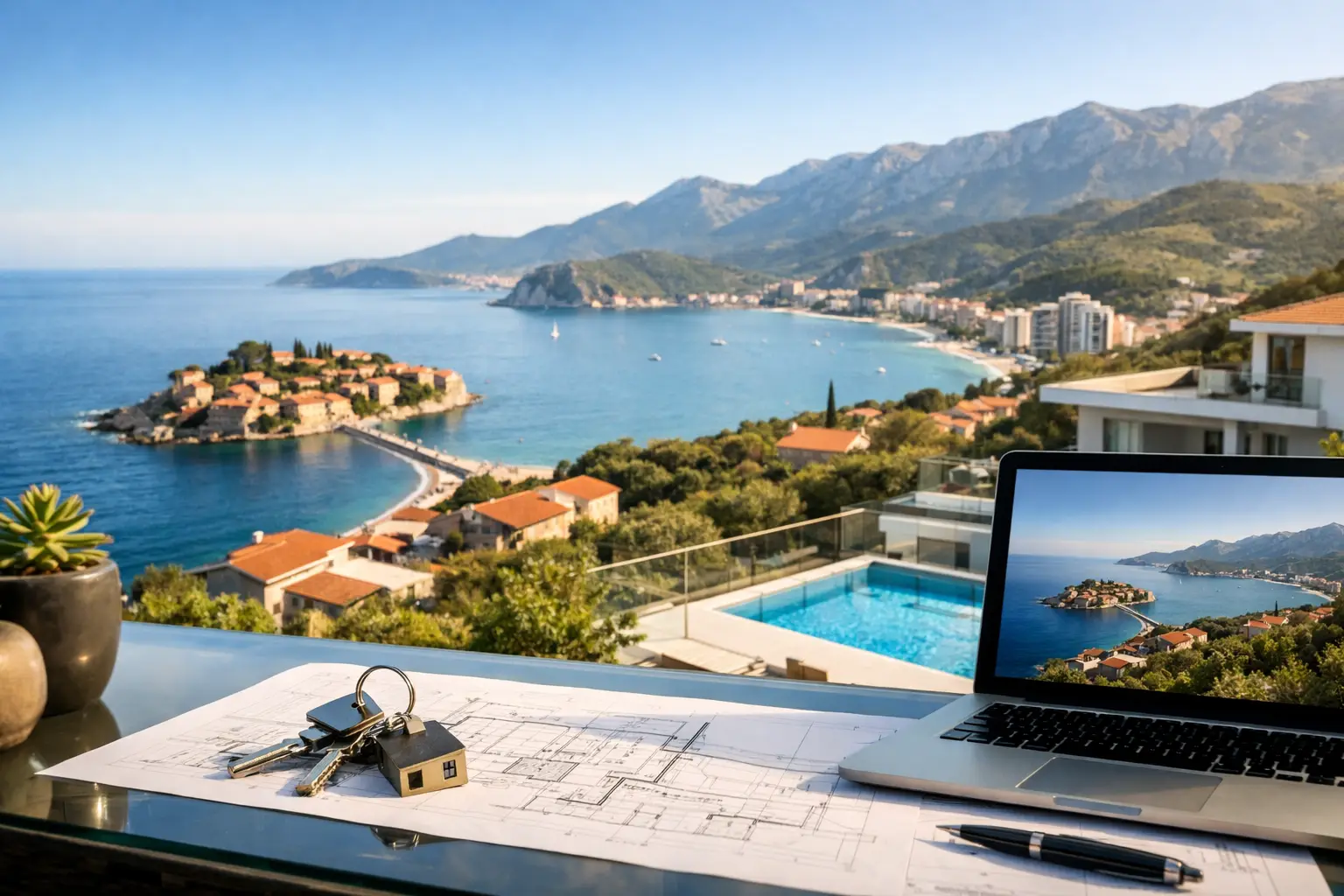



How will the changes to the Law on Foreigners affect the real estate market in Montenegro? The new regulations introduce a minimum property value of €150,000 for temporary residence of foreigners, which could change the structure of demand and increase interest in higher-quality investments on the coast and in tourist areas. Find out what these changes mean for investors, buyers and the future of the real estate market.
The real estate market in Montenegro has been growing strongly in recent years thanks to international buyers, the development of tourism and increased interest from investors from Europe, the region and other parts of the world. However, changes in the legislative framework can often have a direct impact on buyers' investment decisions. That is why the latest Amendments to the Law on Foreigners in Montenegro, published on January 9, 2026, have generated great interest among investors, real estate agents and foreign buyers.
These amendments do not prohibit foreigners from purchasing real estate, but they introduce certain changes regarding obtaining a residence permit based on ownership of real estate. This may indirectly affect the structure of demand and investment strategies in Montenegro.
Below we explain what has actually changed and what impact these changes may have on the real estate market in Montenegro.
What do the amendments to the Law on Foreigners in Montenegro bring?
The most important novelty refers to the conditions for obtaining temporary residence based on ownership of real estate. According to the new rules, citizens of countries outside the European Union who wish to obtain temporary residence on this basis must own real estate with a minimum estimated value of at least 150,000 euros.
The value of the property is determined by the Tax Administration based on an appraisal when calculating the real estate transfer tax. The buyer must also prove ownership of the property and duly paid tax obligations.
It is important to emphasize that this requirement does not apply to citizens of the European Union, nor to citizens of Iceland, Norway, Liechtenstein and Switzerland, who still have a more liberal residence regime.
Another important change is that a foreign buyer must have at least 50% ownership of the property if he or she wants to exercise the right to reside based on ownership.
Temporary residence on this basis is issued for one year, with the possibility of extension if all conditions are still met.
Foreigners are still allowed to buy real estate in Montenegro
One of the frequent dilemmas among buyers was whether the new amendments to the Tenancy Act restrict foreigners from purchasing real estate. The answer is – no.
Foreign citizens can still purchase apartments, houses and commercial properties in Montenegro without major restrictions, with certain exceptions for agricultural land.
In other words, the law does not affect the right of ownership, but rather the conditions under which a property owner can obtain a residence permit.
This distinction is very important for investors who buy real estate exclusively as an investment or for rental purposes, as for such buyers, staying in the country is often not a key factor.
How can changes to the Law on Foreigners affect the demand for real estate in Montenegro?
Although the law does not prohibit the purchase of real estate, certain changes may affect the market structure.
Previously, it was possible to buy a relatively cheap apartment and obtain temporary residence on the basis of it. In some cases, foreigners bought small apartments for tens of thousands of euros precisely for the sake of a residence permit.
By introducing a minimum property value, the market focus could shift towards higher quality and more expensive properties. This could lead to increased interest in:
- new construction on the coast
- luxury apartments in tourist areas
- villas and exclusive residential projects
For investors planning a long-term stay in Montenegro, purchasing a higher-value property may become a logical choice.
Amendments to the Law on Tenants bring increased legal security to investors and residents of Montenegro
Although some changes may seem restrictive, many experts believe that the new law brings greater transparency and stability to the legal framework.
Clearly defined criteria for residency and real estate ownership can increase investor confidence and reduce legal uncertainties that previously existed. The amendments to the law aim to create a more predictable system for foreign investors and residents.
For serious investors, legal stability is often as important as the price of the property.
The impact of the Law on Foreigners on the luxury market segment
One of the possible effects of the new rules, namely the Amendment to the Law on Foreigners in Montenegro, is the strengthening of the luxury segment of the real estate market.
Since the minimum property value for a residence permit is relatively high, buyers who want to stay in the country are likely to invest more in higher-quality projects. This may increase demand for properties in projects such as:
- marina residences
- luxury resort complexes
- premium apartments in tourist areas
This trend can already be seen in cities like Tivat, Kotor and Budva, where luxury projects are attracting buyers from all over the world and where real estate prices are expected to grow above the average in Montenegro. This also applies to luxury projects in the capital, Podgorica, where luxury projects like Capital Plaza are expected to grow significantly above the expected average for Montenegro of 5-7%.
Will the latest amendments to the Law on Foreigners reduce the interest of foreigners in purchasing real estate in Montenegro?
There have also been some public concerns that the new law could reduce the number of foreign buyers. However, the reality is likely more complex.
Montenegro still has several key advantages that attract investors:
- stable currency
- political stability related to NATO membership
- relatively favorable prices compared to the Western Mediterranean
- strong growth in tourism
- favorable tax policy
- stable real estate market
Therefore, many analysts believe that the changes to the law will not significantly reduce investor interest, but will rather filter the market and attract buyers who plan to invest longer-term.
What does this mean for future property buyers?
For foreign nationals planning to purchase real estate in Montenegro, new changes to the law on foreigners mean that investment planning has become even more important.
Potential buyers should pay attention to several factors:
- estimated value of the property
- ownership structure
- tax obligations
- Possibilities of obtaining a residence permit
With proper planning and legal support, purchasing real estate in Montenegro can still be a very attractive investment.
Our team of experienced real estate experts will help you navigate new legal changes, select and find the property that best suits your needs and plans.
Conclusion
The latest amendments to the Law on Foreigners in Montenegro bring significant changes when it comes to residence permits based on real estate ownership. The introduction of a minimum value of real estate for obtaining residence is an attempt by the state to further regulate the market and encourage higher-quality investments.
Although these changes may affect the structure of demand, the real estate market in Montenegro remains open to foreign buyers. For investors looking for a combination of a Mediterranean lifestyle and long-term investment, Montenegro remains one of the most attractive destinations on the Adriatic.
Amendments to the Law on Foreigners and the Real Estate Market in Montenegro - FAQ
Can foreigners still buy real estate in Montenegro after the latest Amendments to the Law on Foreigners from January 2026?
Yes. Foreign citizens can still buy apartments, houses and most commercial real estate in Montenegro. Amendments to the Aliens Act do not limit the right to purchase, but refer to the conditions for obtaining temporary residence based on ownership of real estate.
What must the value of the property be to obtain a residence permit in 2026?
According to the new rules regulated by the Amendments to the Law on Aliens in Montenegro from January 2026, citizens of countries outside the European Union must own real estate with an estimated value of at least 150,000 euros in order to be able to obtain temporary residence based on ownership of the real estate.
Does this rule apply to European Union citizens?
Not entirely. EU citizens, as well as citizens of Iceland, Norway, Liechtenstein and Switzerland, have a more favorable residence regime and are not subject to the same restrictions as citizens of non-EU countries.
Is it possible to obtain a residence permit in Montenegro if several people share ownership of a property?
Yes, but a foreign citizen who wants to obtain a temporary residence permit must have at least 50% ownership of the real estate, after the Amendments to the Law on Foreigners in Montenegro, from January 2026, came into force.
How long does a temporary residence permit based on property ownership last?
Temporary residence is usually granted for a period of one year, with the possibility of extension if all legal requirements are still met.
Could these changes to the law on foreigners affect real estate prices in Montenegro?
It is possible that the new provisions will increase interest in higher-value properties, especially in tourist areas and luxury projects like Porto Montenegro, Lustice Bay and Porto's New. This can further strengthen the premium segment of the market.
Is buying real estate in Montenegro still a good investment for foreign buyers?
For many investors, the answer remains positive. Political stability, a stable currency, a growing tourism sector, as well as increasing international visibility and relatively affordable prices compared to other Mediterranean destinations continue to make the Montenegrin real estate market very attractive for investment.