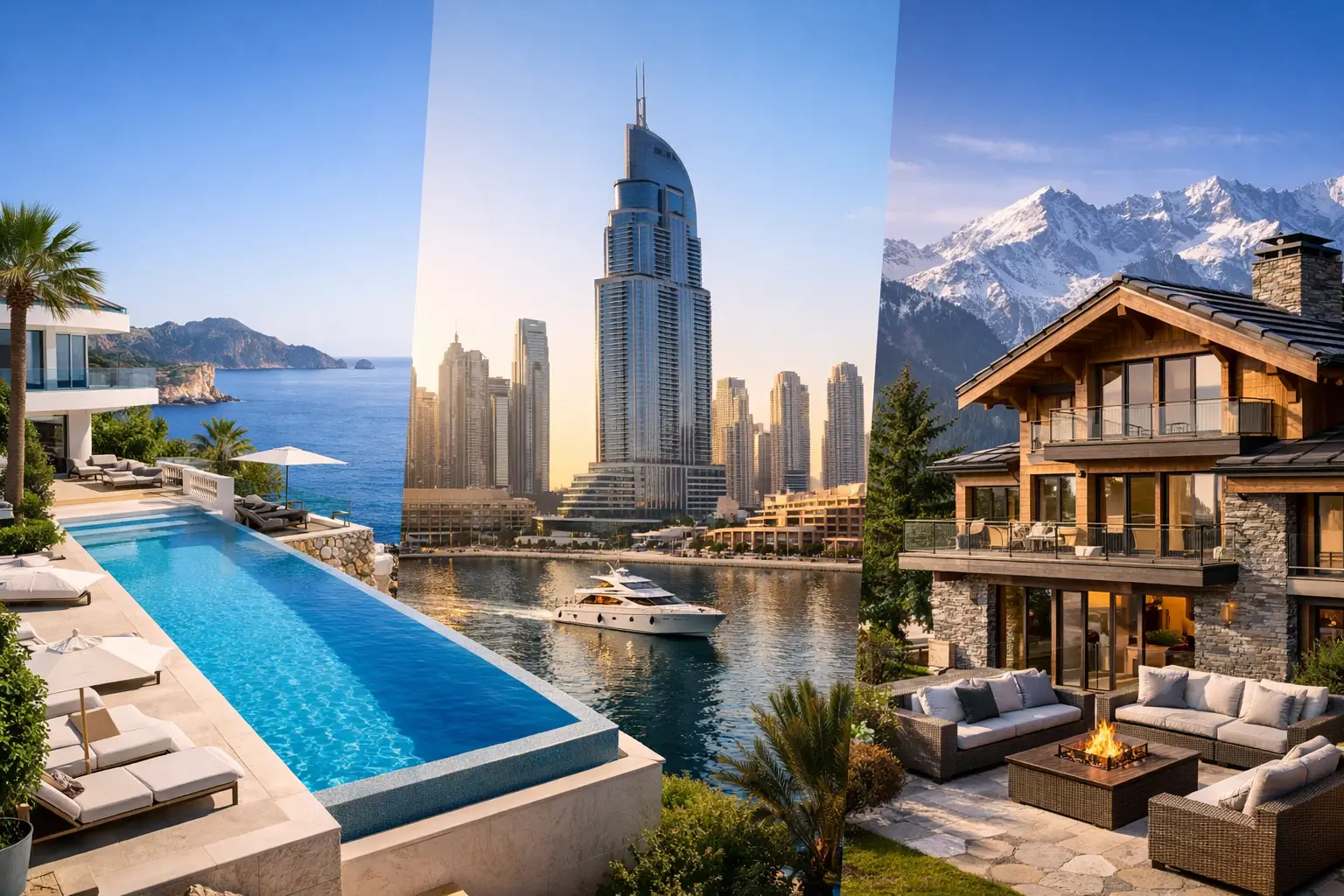



A buyer considering real estate in Montenegro today isn't just looking for square footage. They're seeking a secure decision, a location that retains value, and a property that suits their lifestyle or investment strategy. That's precisely why the market shouldn't be viewed solely through listings, but rather through the relationship between location, construction quality, legal compliance, and future demand.
Montenegro is a small market, but it's not simple. The difference between a good purchase and an expensive mistake often lies not in the price per square meter, but in the details that only become apparent when you know the area. The same applies to the luxury segment, where the address alone is not enough if it's not backed by the quality of the project, infrastructure, and long-term value sustainability.
What does the real estate market in Montenegro look like today?
The market still relies heavily on the coast and Podgorica, but buyer motivations are no longer the same as a few years ago. Once, the purchase of vacation apartments dominated. Today, there are significantly more buyers looking for a second home, a residence for longer stays, or a property that can generate income through carefully planned rentals.
This is especially evident in the premium segment. Buyers are no longer just asking how far a property is from the sea. They are asking who the investor is, what the property management is like, what the access to the marina is, what the privacy is like, and how liquid the property is if they decide to sell one day. Such questions are also changing the way value is assessed.
This is precisely why the prices of seemingly similar properties can differ significantly. An apartment with a view and an apartment in a project with a clear service standard are not the same investment. A villa in an attractive location and a villa with clear documentation, good access roads, and realistic future demand are also not in the same category, even though they may appear similar on paper.
Montenegro Real Estate – Which Locations Are Most In-Demand
When discussing a market that carries premium demand, several locations stand out very clearly. Porto Montenegro, Luštica Bay, and Portonovi remain among the most desirable addresses for buyers seeking a high standard, an international environment, and property with a strong residential and investment character.
Such locations aren't sought after just for prestige. Their advantage lies in offering a curated lifestyle concept – a marina, services, security, maintenance, gastronomy, and infrastructure that supports the everyday use of the property. For a buyer who doesn't want improvisation, this carries significant weight.
Budva and its wider area They still have strong market dynamics, especially for those looking for a combination of personal use and seasonal income. However, selection is crucial here. Not every apartment in Budva is a good investment, just as not every new construction in a high-demand zone is automatically a quality choice.
Kotor and Tivat attract buyers for whom a combination of scenery, international accessibility, and long-term potential is important. Herceg Novi It has a special audience – buyers looking for location character, more peace, and a more authentic Mediterranean ambiance. Podgorica, on the other hand, remains a rational choice for buyers who want stable usability, family housing or a more secure urban rental without distinct seasonality.
What truly determines if a purchase is worthwhile
A good purchase doesn't just depend on whether the price is attractive. In real estate, a cheap entry can sometimes be more expensive in the long run. If a property is poorly located, legally unclear, or difficult to maintain, the initial savings quickly lose their meaning.
The first criterion is location in a narrower sense. It is not enough for the property to be in a well-known city. It is important whether it is in a quiet area, whether it has an open view that cannot be easily closed by new construction, what is the access to the beach, marina, center, or airport, and what is the quality of the immediate surroundings.
The second criterion is the project itself. Construction quality, layout, orientation, garage, reception, privacy, energy efficiency, and building maintenance often have a greater impact on future value than the decorative details that dominate advertisements.
The third criterion is legal status. Proper documentation is not a formality, but the basis for a secure transaction. The buyer must know exactly what they are buying, under what conditions, with what rights, and without what hidden risks. In this regard, serious mediation makes a big difference, as it protects both time and capital.
The difference between buying for living and buying for investment
These two decisions are often confused, and they shouldn't be. A property that is ideal for family living doesn't have to be the best investment for rental income. Conversely, an apartment that has excellent seasonal potential might not be the best choice for everyday living.
A buyer looking for a home typically needs stability, functionality, and long-term comfort. Important factors include layout, parking, access to schools, privacy, noise levels, everyday services, and the feeling that the property can be used year-round without compromise.
An investor sees things differently. They are interested in liquidity, demand in a specific segment, potential for value growth, maintenance costs, and the utilization model. In the luxury segment, project recognition is also important, as branded and infrastructurally complete locations often have better international visibility and a more stable target audience.
This is why the most expensive mistake is to buy property without a clear answer to the question of what it's for. When the goal is precisely defined, the choice becomes much more rational.
What do customers typically pay too little attention to?
One of the most common mistakes is focusing on photos and finishing materials while neglecting the bigger picture. A nicely furnished apartment can make a strong first impression, but a purchase isn't based on a ten-minute impression. It's based on how the property will function in five or ten years.
The importance of facility management is often underestimated. In higher-standard projects, this issue is not secondary. The quality of common area maintenance, the level of service, and professional management directly affect value preservation.
Buyers sometimes overlook the exit strategy. Even when buying for themselves, it's useful to think about how attractive the property will be to the next buyer. Properties with a clear character, a good micro-location, and a clean status far more easily retain market strength.
When does the premium segment make the most sense
Premium and luxury real estate are not a good choice just because they seem attractive. They make sense when a buyer wants a combination of quality of life, privacy, a prestigious location, and a more resilient value. In the best projects, you buy more than just space – you buy a standard of living and the assurance that the property is part of a long-term sustainable concept.
Of course, there's no automaticity there either. Not every expensive property is premium, just as not every premium property is suitable for every buyer. Someone will prefer the marina and The urban rhythm of Tivat, for some a more secluded resort environment, and for others a villa with a greater degree of privacy above the coast. A good decision is made only when the lifestyle or investment goal is combined with the right location.
In that part of the market, the broker's experience becomes especially important. Nekretnina.me is a relevant partner precisely where the buyer needs more than an offer – a clear assessment, time-saving selection, and support during negotiations and verification of all key elements of the purchase.
How to shop without unnecessary risk
The best approach is disciplined, even when buying emotionally. First, you should define your budget and the purpose of the property. Then, narrow down your choices to a few locations that really fit that goal, instead of chasing everything currently trending on the market.
After that comes the phase of serious verification. Here, not only the price and square footage are considered, but the complete profile of the property – documentation, condition of the building, quality of the project, costs, usability potential, and market position compared to similar options.
Buying property in Montenegro can be an excellent move, but the best results rarely come from hasty decisions. They come from a properly chosen location, a realistic valuation, and a partner who understands that you're not just buying walls, but future security, lifestyle, and capital.
If you approach the market carefully, with clear criteria and the right advice, real estate can become one of the few decisions that has both personal and financial value.