


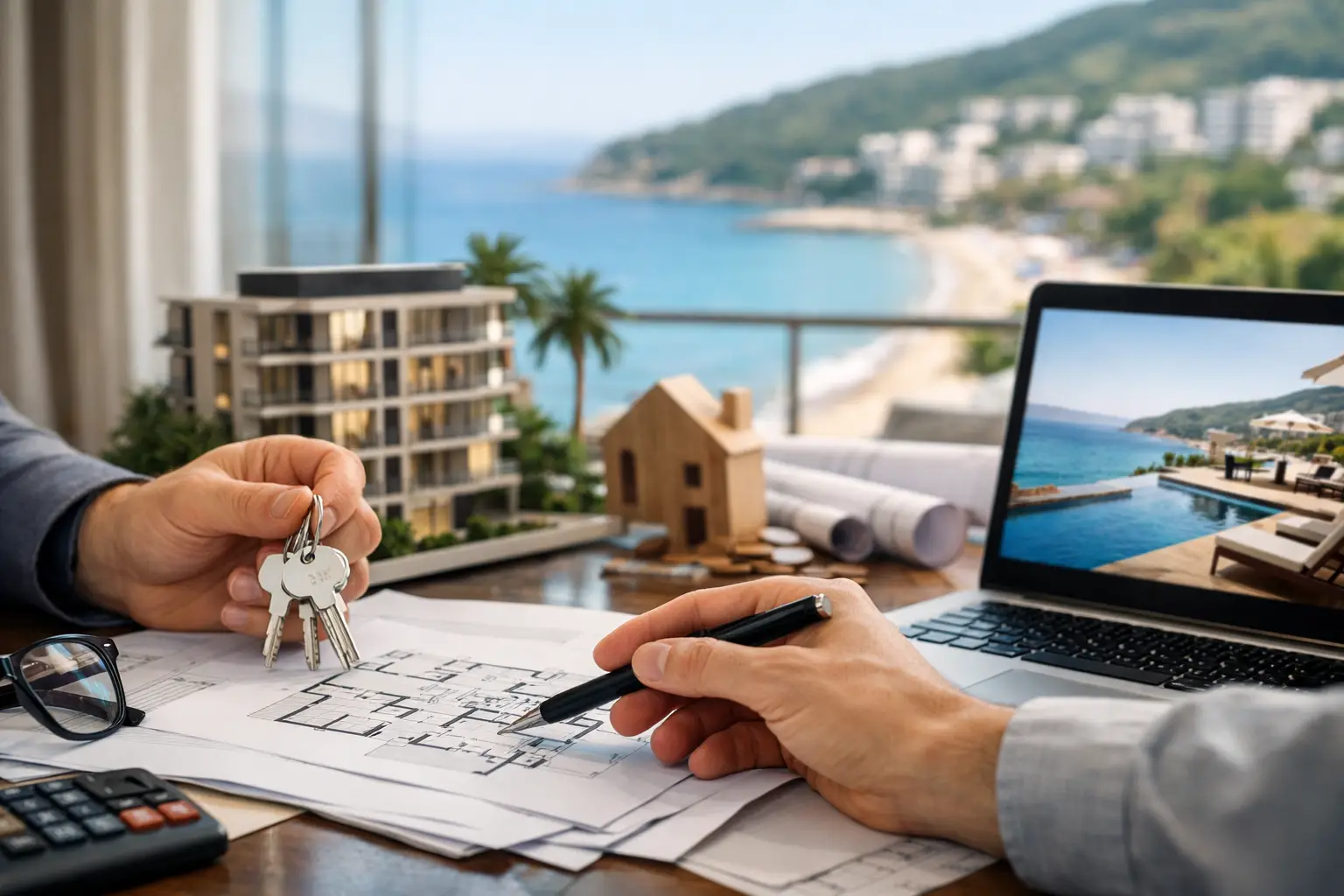
Buying an apartment often seems simpler than it actually is. At first glance, everything appears straightforward – a good location, a nice view, adequate square footage, and a price that fits the budget. However, when the question arises of what one needs to know before buying an apartment, the real answer isn't a single detail, but a whole series of checks that directly affect the security of the purchase, the future value of the property, and the quality of its use.
An apartment is not bought based on impression alone. It is bought based on documentation, market position, construction quality, maintenance costs, and the real potential to retain or increase value. Especially when it comes to real estate in attractive locations, where emotion often speeds up the decision, it is important to maintain investment discipline.
What you need to know before buying an apartment in a good location
Location is still the primary filter, but not every good location is good for every buyer. Someone is looking for a personal apartment for use during the season, someone wants a property that will generate rental income, and someone is buying for the long term, as part of a portfolio. Therefore, the same address can be an excellent investment for one buyer and the wrong choice for another.
When assessing a location, it's not enough to just look at proximity to the sea, city center, or marina. It's important to understand access to the property throughout the year, whether there are amenities nearby that truly enhance the value of staying there, the level of privacy, and how much the area is burdened by seasonal crowds. An apartment that seems ideal in the summer can have a completely different dynamic in the off-season.
For the premium and luxury segment, a micro-location and context carry additional weight. The price difference between two similar properties often doesn't stem from square footage, but from orientation, floor level, the openness of the view, the quality of the complex, and the reputation of the location itself. These are nuances that seem minor on paper but make a big difference in sales and rentals.
Documentation is more important than the interior
In practice, buyers are easily attached to the aesthetics of a space. A well-decorated apartment leaves a strong impression, but legal security must take precedence over visual impression. Before purchasing, it is necessary to verify ownership, the basis of acquisition, whether there are any encumbrances or restrictions, as well as whether the property is registered in accordance with the actual state.
Special attention should be paid to whether the property is legal, whether the apartment has proper documentation, and whether the square footage in the papers matches what is being purchased on site. Differences between the advertised, usable, and registered area are not uncommon. Sometimes they are trivial, but sometimes they raise serious questions for future sale, taxation, or financing.
When buying an apartment in a new development, it is equally important to check the developer, construction schedule, previous projects, and contractual obligations. Buying a finished apartment is not the same as entering a project under construction. In the first option, the buyer sees the final product, while in the second, they also assume part of the development risk.
Construction quality isn't just visible in photos
Photos and presentations can show style, but rarely reveal construction standards. This is where the most expensive mistakes happen. Finishes can look presentable while hiding mediocre insulation, poor carpentry, or inadequate heating and cooling systems.
The buyer needs to assess the type of materials used, how the sound and thermal insulation are handled, what the ventilation is like, whether there is a garage, elevator, reception or security, as well as who manages the building after moving in. For apartments in residential complexes, the quality of property management is often as important as the apartment itself. A well-maintained complex preserves the value of the property. Poor management will bring it down over time.
If the goal is to lease, then the technical details become even more important. Guests quickly recognize the difference between an apartment that looks luxurious and one that actually functions at a high level. Breakdowns, noise, dampness, or poor organizational access directly affect ratings, occupancy, and reputation.
The price of an apartment is never the only expense
One of the most common mistakes is focusing solely on the purchase price. However, the actual cost of buying also includes taxes, notary and administrative expenses, potential furnishing costs, as well as future maintenance costs. For apartments in gated communities or properties with additional amenities, monthly fees can be significant.
That is why it is important to know in advance the regular costs of management, maintenance of common areas, garage, security, reception, pool or spa facilities, if any. A property that initially seems like a good buy may have a cost structure in the long run that diminishes its investment sense.
On the other hand, higher costs are not automatically a bad thing. If they deliver better service, greater appeal, and higher market value, they can be fully justified. The key is for the buyer to know what they are paying for and what impact it has on the property.
When buying an apartment as an investment
If you are buying an apartment to rent it out, then the decision should not be based solely on whether you personally like it. It is more important how the market sees it. This means you should consider seasonality, type of guests, average occupancy, local competition, and a realistic income level, not an optimistic scenario.
A good investment apartment typically has a clear target group. This could be families, couples, business guests, or clients looking for a premium stay. A property without a clear profile is harder to position and more likely to get into a price war with the competition.
Besides income, the exit strategy should also be analyzed. Will that apartment be in equal demand in five or ten years? Is it located in a zone that is developing according to a plan, or in an area that could be overwhelmed by new construction? An investment is not just what it brings today, but also what retains its value when you decide to sell.
What to know before buying a new apartment
New construction has clear advantages – modern standards, more efficient systems, lower initial investment, and often more attractive amenities. However, buying in a new development requires more attention than many expect, especially when purchasing before the building is completed.
It is necessary to precisely understand what is included in the price, what the level of finishing is, when the property is handed over, under what conditions payment is made, and what happens if deadlines are missed. Buyers often assume that everything they see in the promotional materials is part of the standard offer, only to later find out that certain elements are included in a higher equipment package.
It's also important whether the project has long-term market logic. A good project isn't just new. It must be well-structured, managed with quality, and located where demand is continuous. Otherwise, new construction very quickly loses the premium it had at the beginning.
Emotion is allowed, but the decision must be rational
Buying an apartment often carries a personal motive – the idea of vacation, privacy, lifestyle, or a family gathering place. That's perfectly legitimate. The problem arises when emotion completely suppresses fact-checking.
An apartment with an impressive view might have poor access to parking. A modern complex could have excessively high maintenance costs. A quiet location might be great for personal use but poor for short-term rentals. Every advantage has its context, and the true value of a property is only seen when all sides are considered.
Therefore, the best customers are not those who buy the fastest, but those who know how to compare multiple options, seek clear answers, and understand exactly what they are getting for their money. That is the essence of quality brokerage – not to accelerate a decision at all costs, but to make it more secure.
In a market where a good apartment can be both a place to enjoy and a serious capital asset, the difference between a good and a bad purchase is rarely accidental. It is almost always the result of preparation, due diligence, and expert guidance through the process. If the purchase is approached thoughtfully, an apartment becomes not just a property, but a part of a more stable and quality future.