

Montenegro, a land of dramatic landscapes and layered historical influences, hides a rich architectural heritage that goes back thousands of years. From ancient Roman villas to luxurious Venetian palaces in the Bay of Kotor, this area bears witness to the fusion of the Mediterranean and the Balkans, to the meeting of maritime power and continental silence. Especially in Boka Kotorska — that natural fjord that was the center of trade, culture and religion for centuries — architecture becomes the language of the civilizations that intertwined here.
At the center of that story is an idea villas — of home, refuge and symbolic center of life. From Roman times, through the Venetian era, to the present day, The villas are in Montenegro. others synonymous with harmony between nature, sea and man.
Roman villas in Montenegro — the roots of luxury and harmony in the Mediterranean
The Roman presence on the territory of today's Montenegro left deep traces, especially in the coastal areas. Roman villas were not only the residences of wealthy patricians; they represented mini microworlds — a combination of farmstead, home, vacation spot, and cultural expression.
The most famous archaeological remains of Roman villas on the Adriatic coast of Montenegro are located in the vicinity of Risno, Budva and Ulcinj. In Risno, the former Rhizonu, traces of Roman mosaics, baths and residential complexes were discovered, indicating that the villas were designed with attention to comfort, aesthetics and climatic conditions. The walls were decorated with frescoes and mosaics, the courtyards open to the sea, and the terraces often overlook the bay — an architectural philosophy that still shapes the spirit of Mediterranean luxury today.
For the Romans, the villa was not only a home, but a concept of living in harmony with nature. In Roman terminology they differ urban villa — city residence, and rustic villa — country estate. In the Bay of Kotor, due to the mild climate and fertile slopes that descend towards the sea, both forms were represented. Many archaeologists believe that later Venetian palaces just inherited this Roman idea of an "open home" that blended into the landscape.
From the Romans to the Venetians — the continuity of the Mediterranean spirit in architectural forms on the shores of the Adriatic Sea
When the Venetians took control of Boka Kotorska in the 15th and 16th centuries, they found settlements that already had ancient foundations and an urban tradition. Their influence was not only political and naval — it was also aesthetic. Venetian architecture, imbued with Renaissance and Baroque elements, brought to Boka the sense of order, proportion and luxury that was characteristic of Venice.
The Venetian palaces in Kotor, Perast and Prčnje were built of local stone, often white and porous, with richly decorated balconies, coats of arms and arched windows. Those buildings basically carried the spirit of antiquity — organized around a central courtyard or loggia, with a clear relationship between public and private space, between sea and home.
They are particularly interesting. villas and palaces in Perast and Prčnja, which were built by wealthy seafaring families. They were more than homes — they were manifestations of prestige and identity. The facades looked towards the sea, because it was the sea that was the source of power and wealth. Stone steps, symmetrical windows and Renaissance details were reminiscent of Venetian homes along the Grand Canal, while the interiors were a testament to the fusion of local modesty and European splendor.
Villas and palaces in the Bay of Kotor — a landscape of stone and light
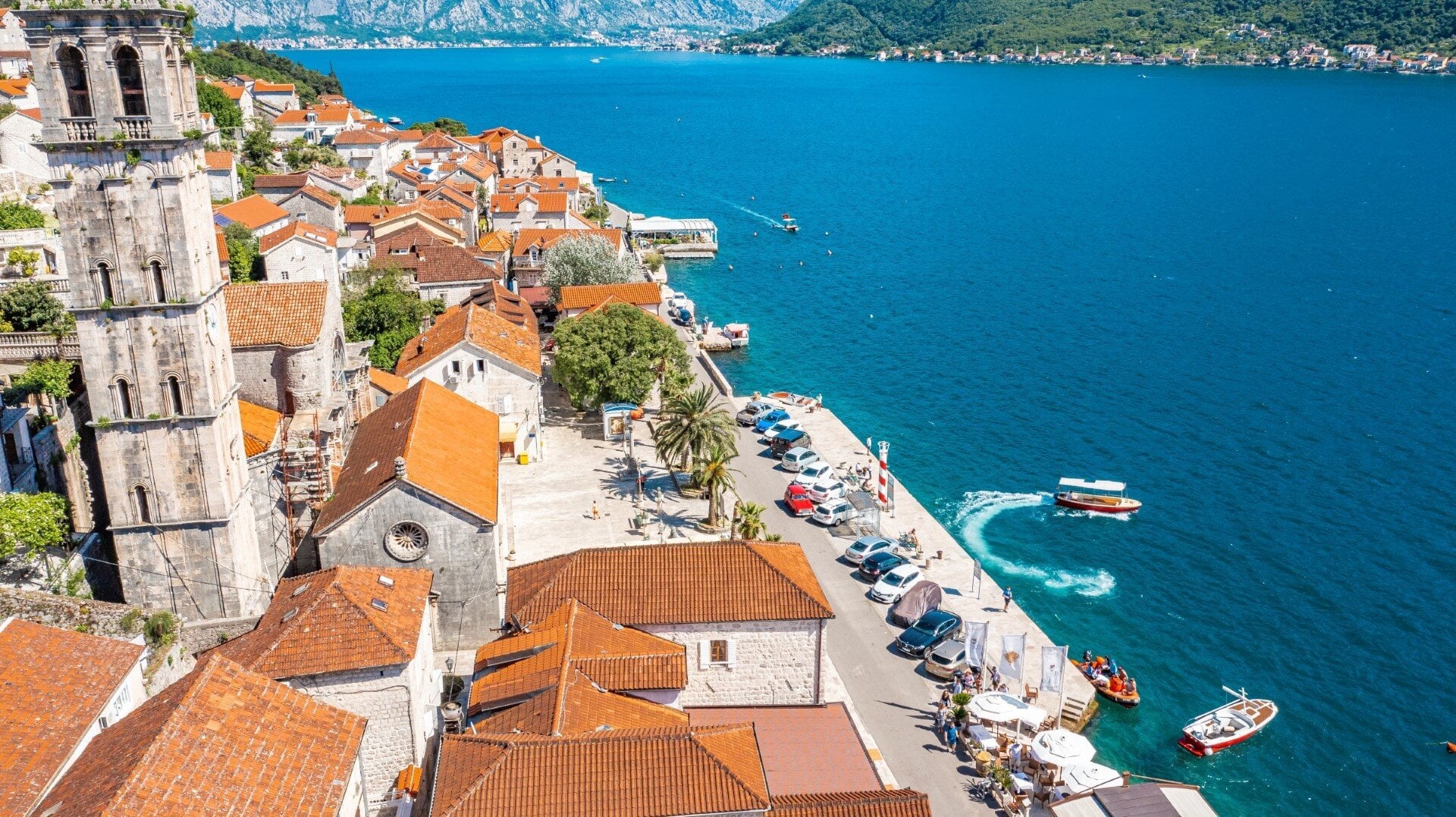
Bay of Kotor, often described as the southernmost fjord of Europe, it represents one of the most beautiful combinations of nature and architecture in the Mediterranean. In its settlements — from Kotor to Perast and Dobrota — villas and palaces stand as stone monuments to maritime history and culture.
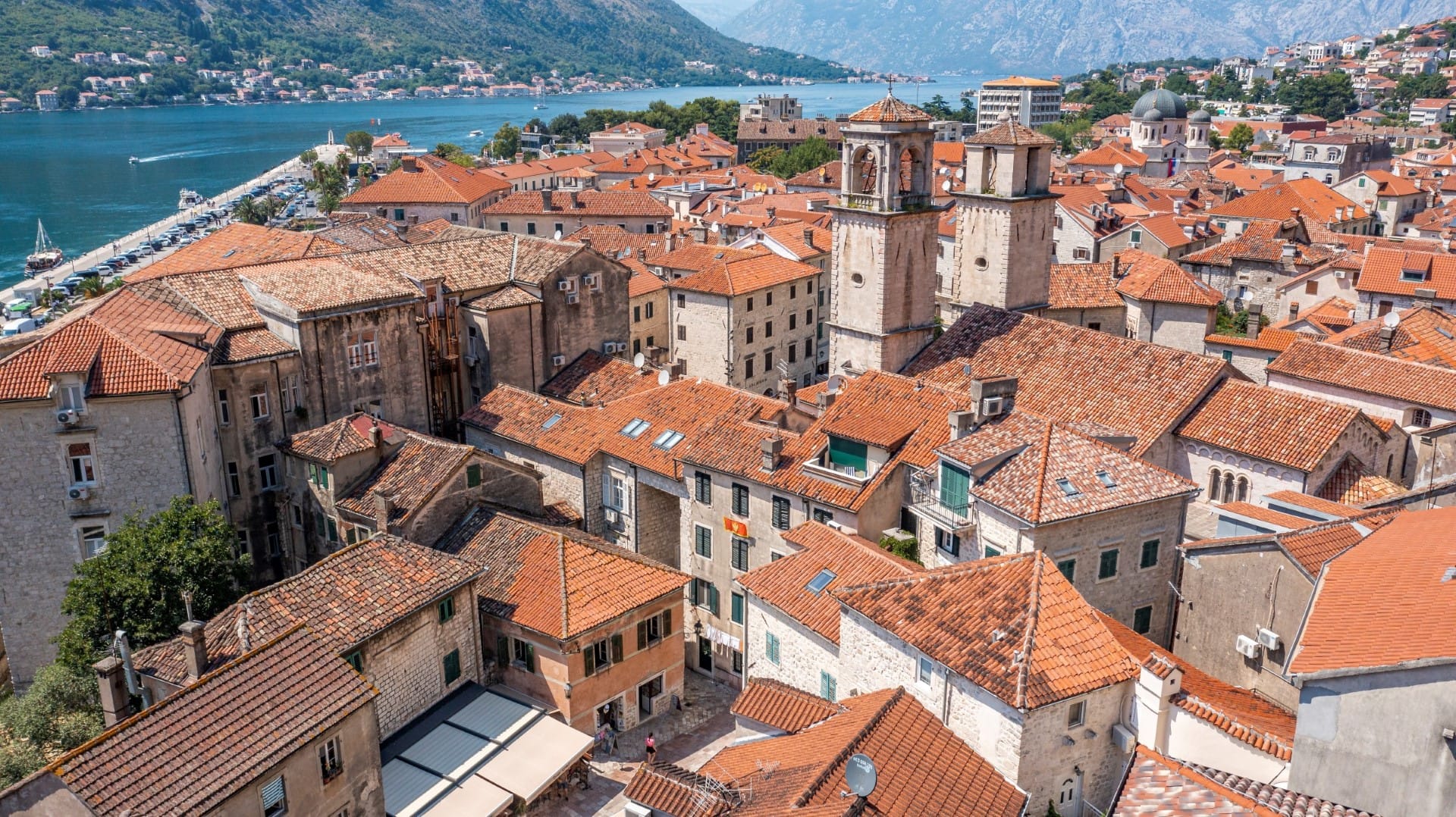
Each of them has its own story, but they all share common elements: solid stone walls, high vaults, stone-framed windows and richly decorated balconies. The streets are narrow and stone, and behind every facade hides a courtyard, a water tank and a view of the sea.
The well-known families of Boka — Buća, Drago, Visković, Balović, Zmajević and others — left behind lavish palaces that still bear witness to an era in which wealth, faith and naval prowess merged into a unique style.
In Kotor, Drago Palace and Pima Palace have Gothic-Renaissance details, while in Dobrota i The tall villas reflect the baroque harmony with the local stone and the blue horizon. All these palaces form a recognizable silhouette of the bay — one that today attracts architects, historians and travelers from all over the world.
Baroque palace near the Cathedral of Saint Tripun in Kotor
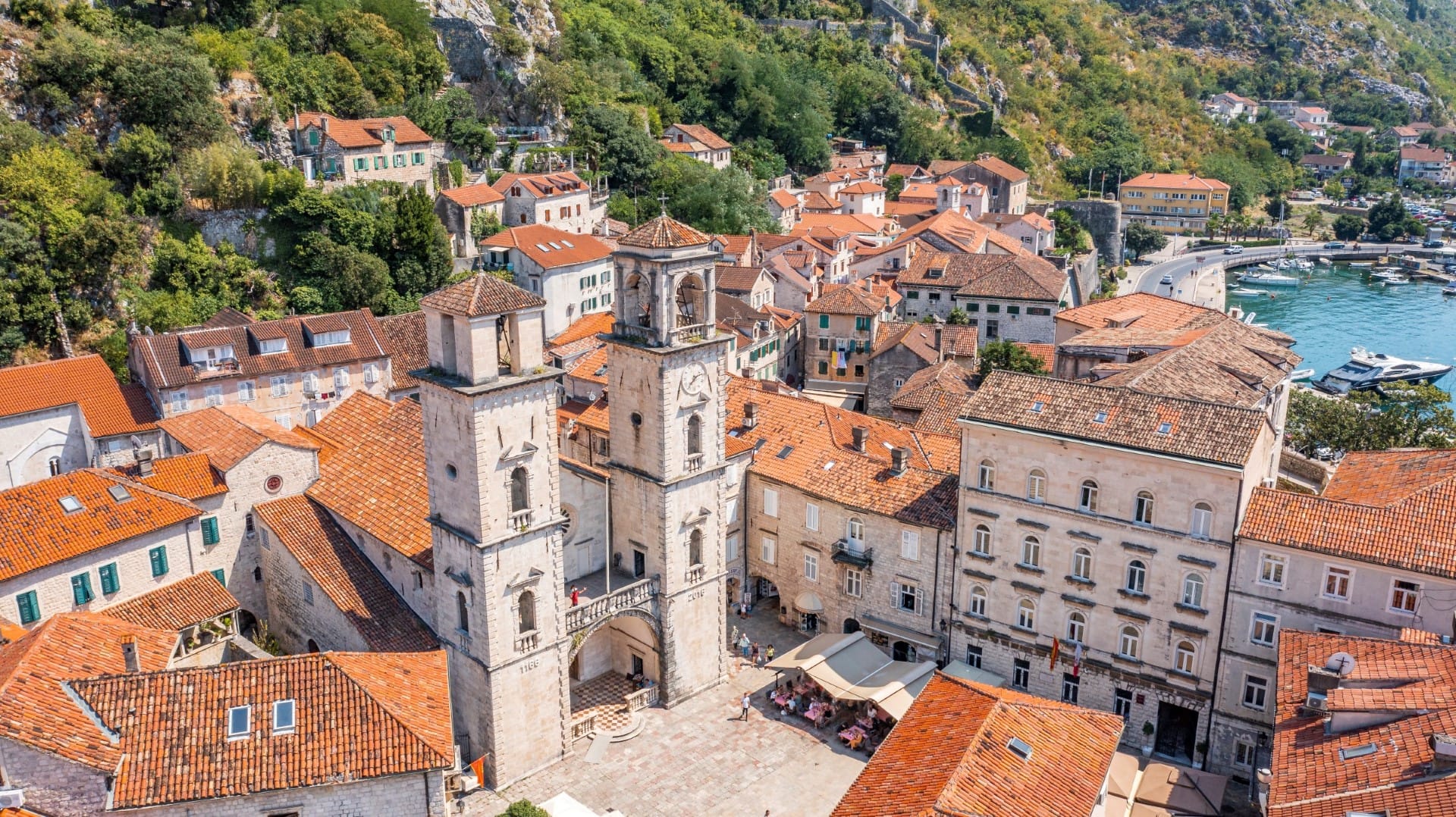
This one historical palace located near the Cathedral of St. Tripun in Kotor, belonged to the noble Vrachien family, which had a family house in this place as early as the 14th century.
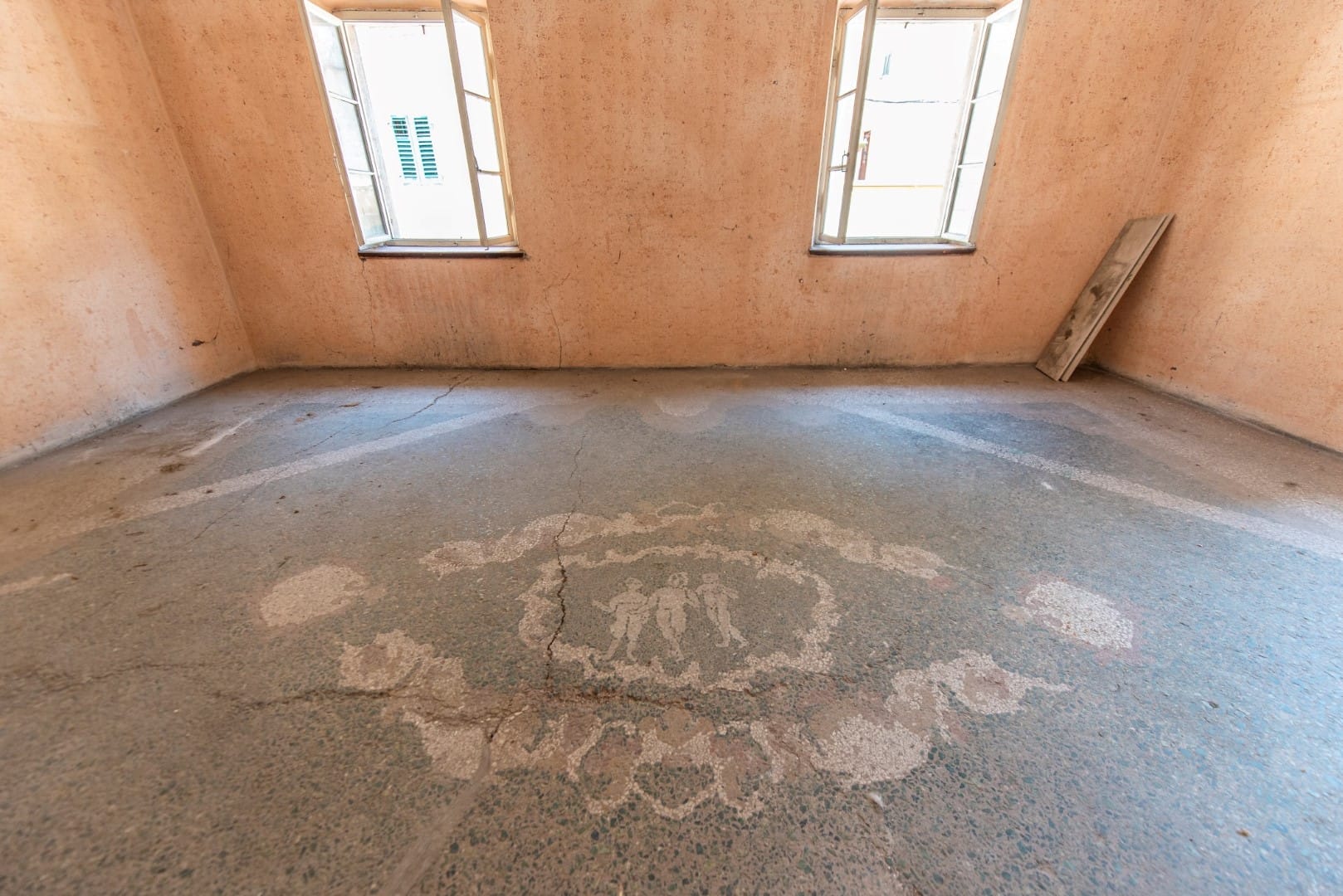
Today's building dates from the second half of the 18th century and represents an exceptional example of Baroque architecture in Boka Kotorska. Unusually for palaces in this area, the facade is plastered, which gives it a special visual character and emphasizes the elegance of the urban style of the time. Above the main portal stands out the richest decorative element on the exterior of the building - a relief composition of angels made of stucco, framed by baroque ornaments and the Vrachien family coat of arms, which depicts a swallow, a symbol of family identity and heritage. Next to the portal there is an arched street passage, above which there is a room that originally served as a house chapel — the only one of its kind in Kotor, which further emphasizes its historical importance. The interior of the palace is extremely well preserved. The staircase leading to the first floor is decorated with wall paintings and marble details made using the **al secco** technique, the work of the Italian master Napoleon d'Este from the second half of the 19th century. The main salon still preserves its original floor covered with mosaics and terrazzo, while the side rooms are connected by authentic wooden doors made of several types of wood, which testifies to the high level of skill and refinement of the artisans of the time.
Venetian Baroque in Montenegro: Beskuća Palace
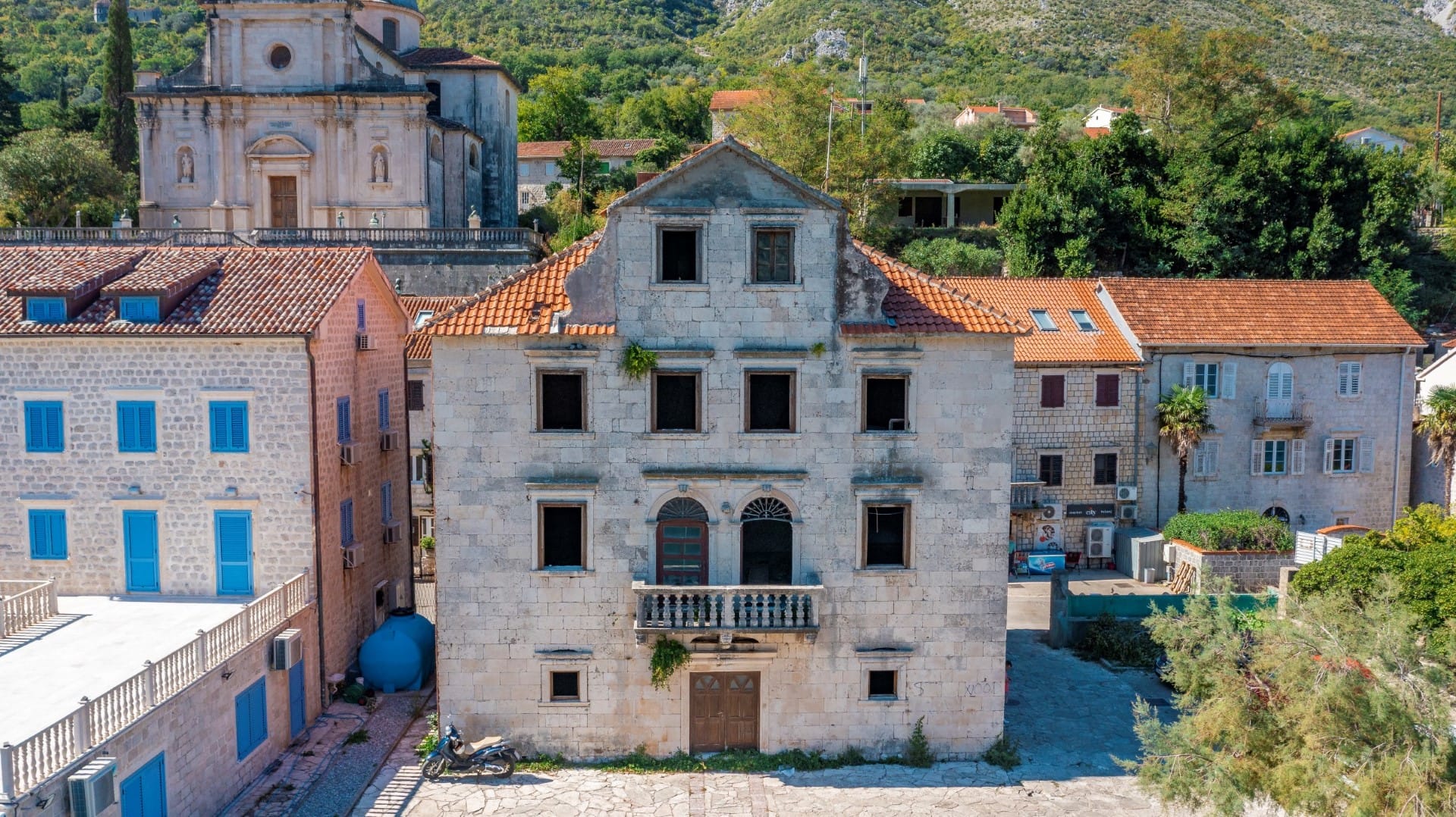
Venetian Baroque interprets elements of the European Renaissance and early Gothic with the grandiosity of Baroque and the minimalism of Mediterranean stone. The Beskuća Palace in Prčnje near Kotor belonged to the noble Beskuća family, built at the beginning of the 18th century and is a typical example of the Bokele Baroque palace. It consists of 4 levels with a gross area of 608.5 m2, it is built of finely carved Korčula stone. On the ground floor, there is the main entrance with two small windows with a characteristic baroque profile and two coats of arms in relief. On the first floor, there is a balcony with a stone balustrade and three supporting profiled consoles, which is accessed through two portals with arched skylights decorated with metal mesh. On the last level there is a viewpoint, so-called. belvedere, which is decorated with baroque profiled volutes.
Zmajević Palace in Perast — the jewel of baroque Boka
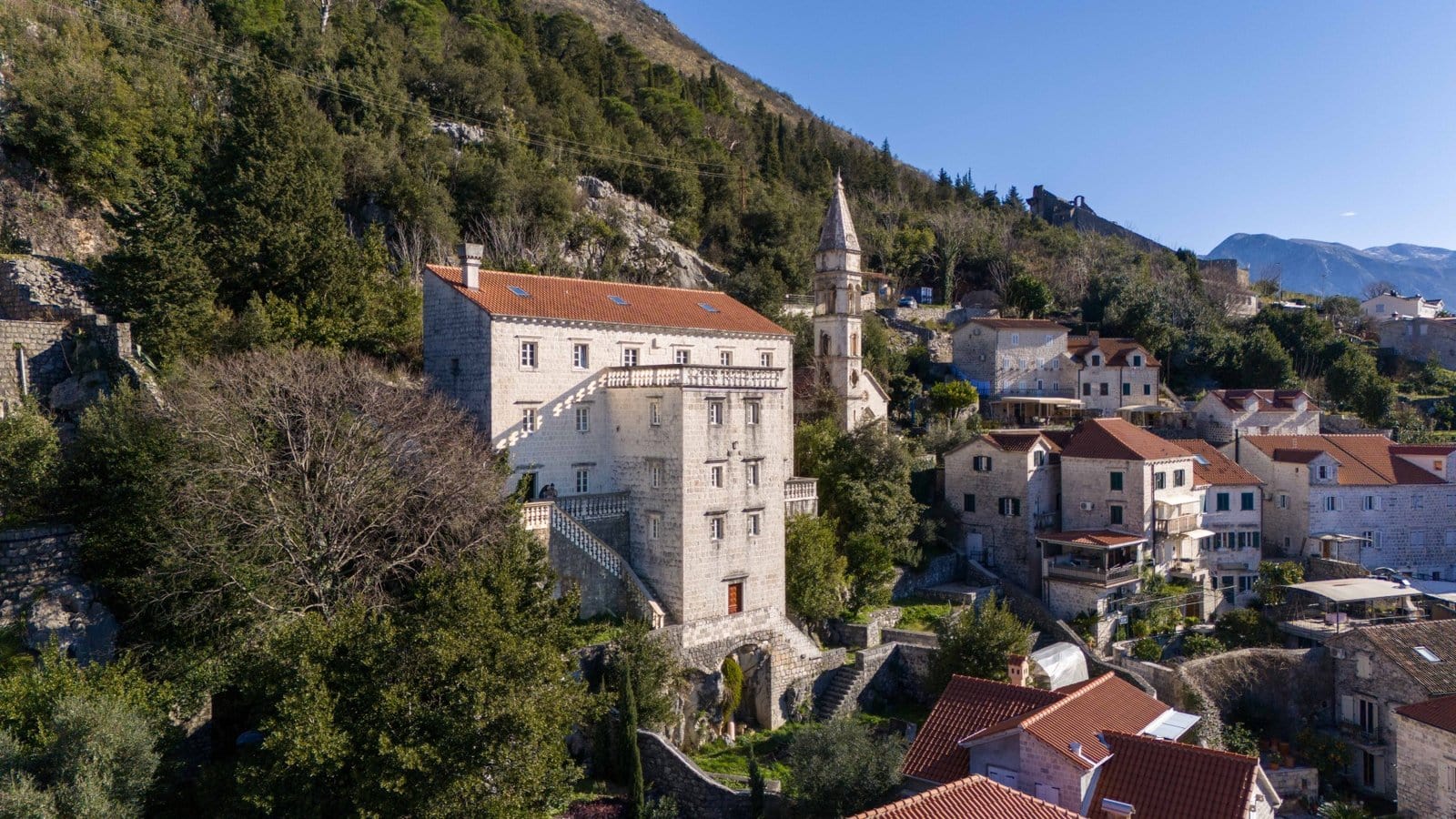
Among the most prominent examples of Venetian architecture in Montenegro is Zmajevic Palace in Perast, one of the masterpieces of the Baroque period on the Adriatic. Built in the 17th century, this palace was the home of the famous naval and spiritual family Zmajević, which produced several bishops, admirals and intellectuals.
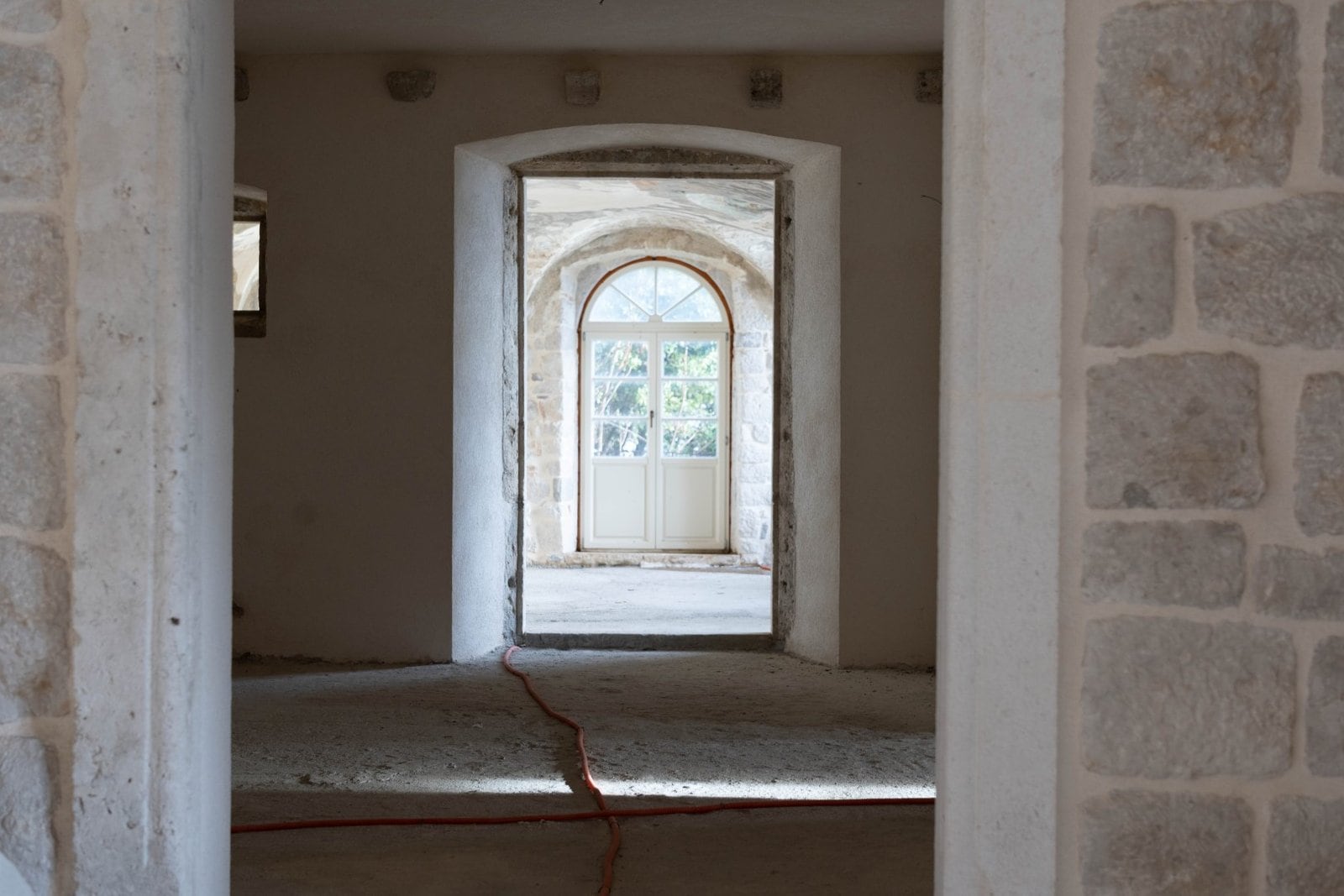
Built on a rock and from local stone, symmetrically arranged, with a prominent central part above a cave in the rock and strong side wings, the palace represents an exceptional construction solution. The construction of the palace took place in several phases: from the original defensive tower in the front part, which today forms the central part of the palace, through the addition that extended the tower towards the hill, to the construction of the northern and southern wings in the third phase, which united the older parts into a whole. The original defensive role of the central part of the palace is indicated by loopholes on all walls along the entire height of the building, as well as an elongated room with walled loopholes, dug into the rock, which can be reached from the building's vaulted vestibule. The ground floor of the palace had a public character, with a ceremonial hall in the north wing, a painted chapel in the central part and a vaulted open loggia in the south wing. The chapel and loggia were painted with frescoes by a famous baroque painter from Perast → Tripo Kokolja, to whom Andrija Zmajević was a patron. In the northern part of the palace there is also the area of the older trapezoidal chapel at the base, which was accessed from the courtyard with the so-called "bishop's throne", that is, a throne carved in rock. On the facade of the palace as a spolia, a Roman cippus was installed, and on the window frames of the first and second floors, inscriptions in Latin were carved. Zmajević's library, according to some data, the largest in Dalmatia, was located in the palace. Taken from the website of the Montenegrin Academy of Sciences and Arts
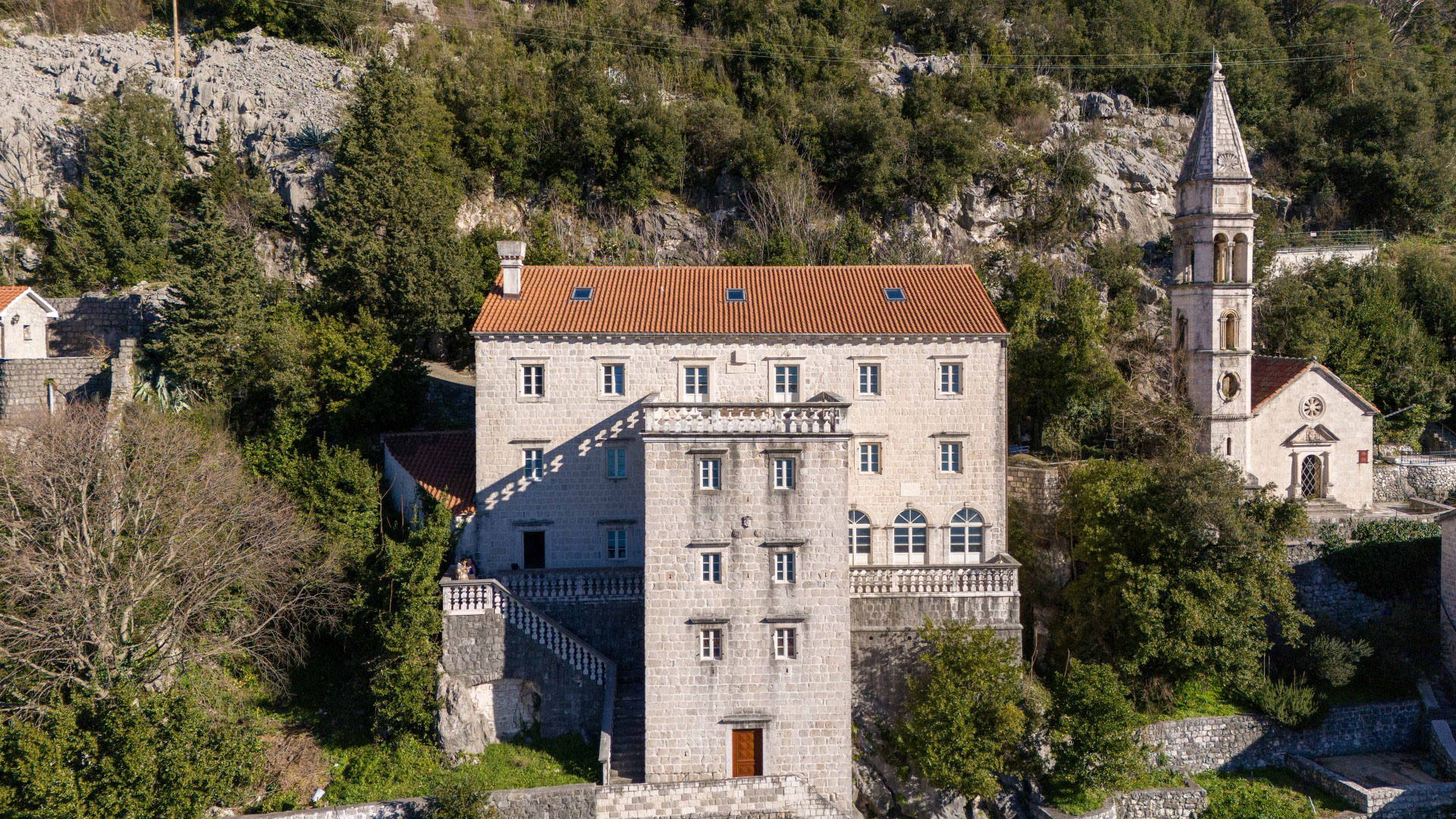
Facade Zmajevic Palace, facing the sea, exudes dignity and proportion. The three-story structure, with elegant biforas and a loggia on the first floor, is reminiscent of Venetian palaces, but with a clear local stamp — the use of Bokelje stone and carefully shaped volumes that follow the relief of the terrain.
The interior of the palace testifies to the high level of education and culture of its owners. The Zmajevics were known for their library and art collection, and the palace itself was a gathering place for scholars and priests. Legend has it that Archbishop Andrija Zmajević watched the construction from its windows Church of Our Lady of the Rocks — symbol of faith and unity of Perast.
Today, Zmajević Palace represents a perfect combination of architectural elegance and historical identity. Its proportions, decorativeness and position make it one of the most important monuments of Venetian heritage in Montenegro.
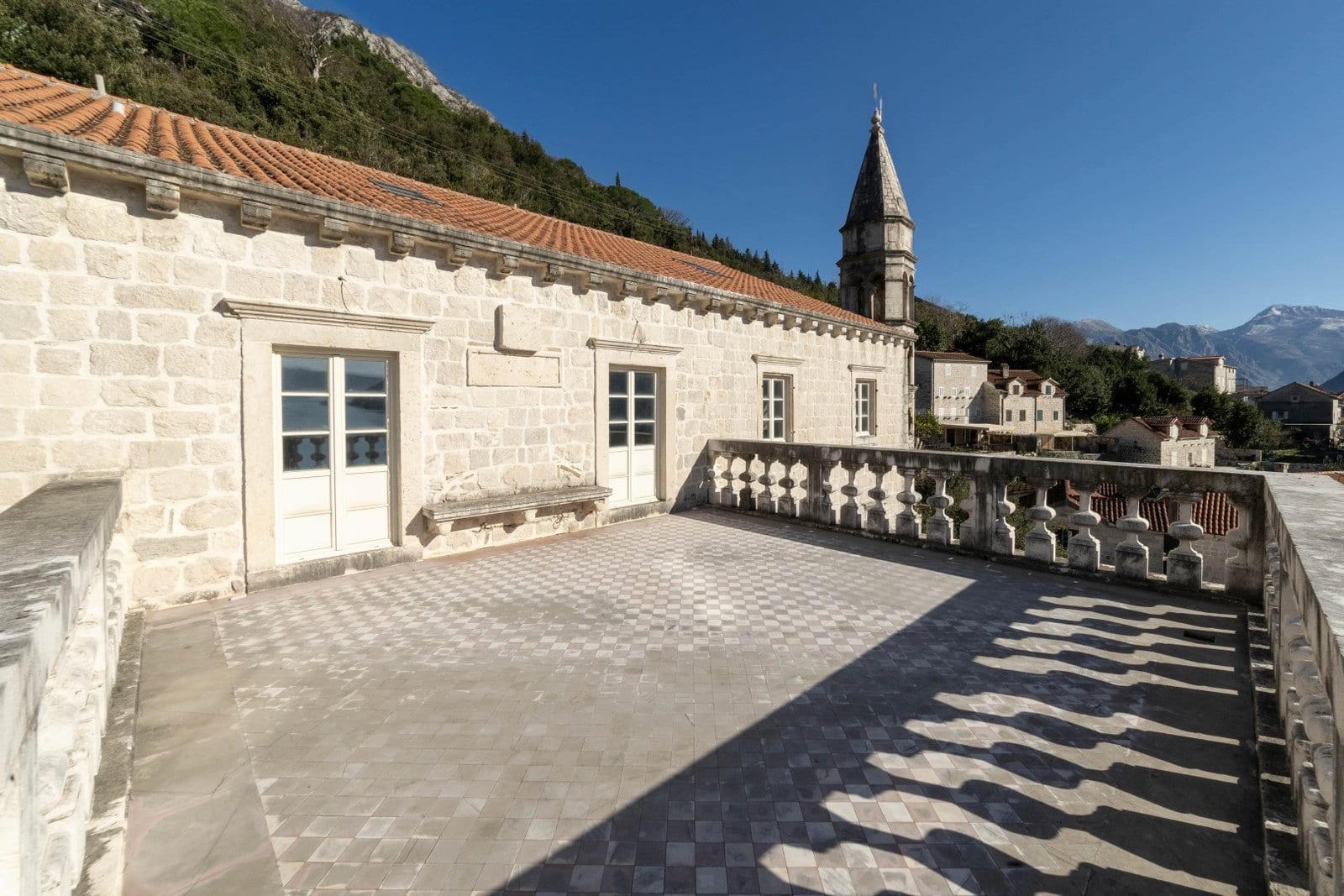
Famous for the creation of important figures in the history of Perast, the palace is in the final stage of reconstruction while preserving the architectural essence from the Zmajević era. Despite the internal changes, the original construction logic and authentic materials remained, ensuring the continued dominance of the palace in Perast.
Spread over a plot of 1605 square meters, the palace covers 565 square meters. Surrounded by solid stone walls, the property includes terraced gardens and offers stunning views of the Bay of Kotor and the islands of Gospa od Škrpjela.
Located in the picturesque village of Perast, which was once a major Mediterranean maritime center, this unique estate is a true testament to the rich history that surrounds it, especially the glorious Venetian era.
A fusion of eras — the Roman spirit in Venetian stone
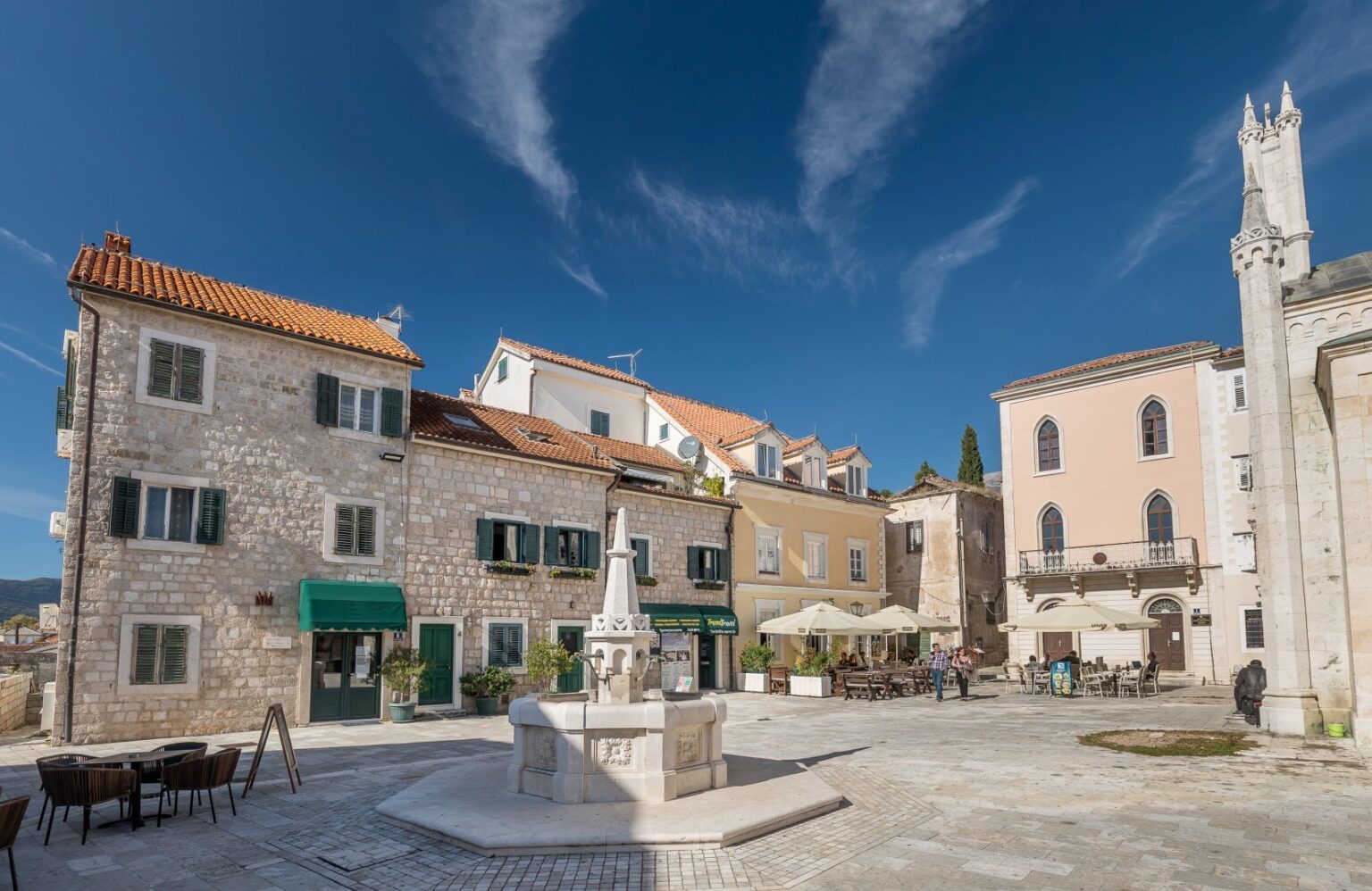
Although they are separated by a thousand-year time gap, the connection between Roman villas and Venetian palaces in Montenegro is undeniable. The Roman concept of harmony with nature, open space and functionality survived through the Venetian reinterpretation of luxury and power symbolism.
In the Bay of Kotor, those two worlds merge into a unique landscape: villas and palaces act as a natural extension of the rocks and the sea. Stone facades that change color with daylight, gardens hidden behind walls and loggias that "look" towards the horizon — all this reflects the continuity of the idea of a house as a place of peace, prestige and beauty.
Stone villa of Dobrota captains with pontoon, Dobrota, Kotor
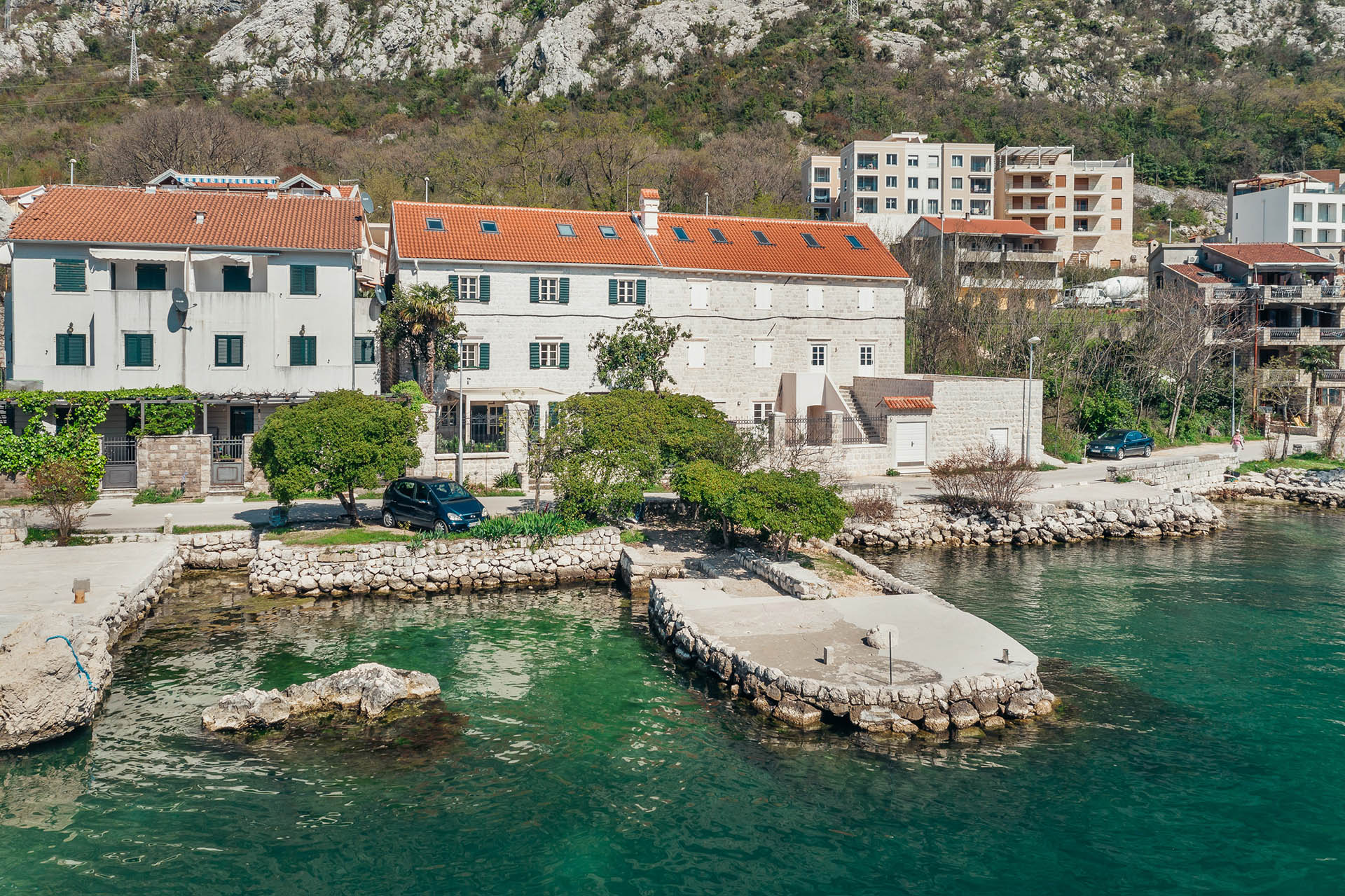
Luxury designer stone villa on the first line to the sea, in Dobrota, with a pontoon. Carefully renovated, the villa has preserved authentic details, combined with contemporary style and newly designed branded furniture and home furnishings.
Impressive historical palaces of Dobrot captains, ancient buildings and churches are the trademark not only of Boka Kotorska, but also of the whole of Montenegro, as a new luxury destination.
A combination of opulence and simplicity in Stari Rosa
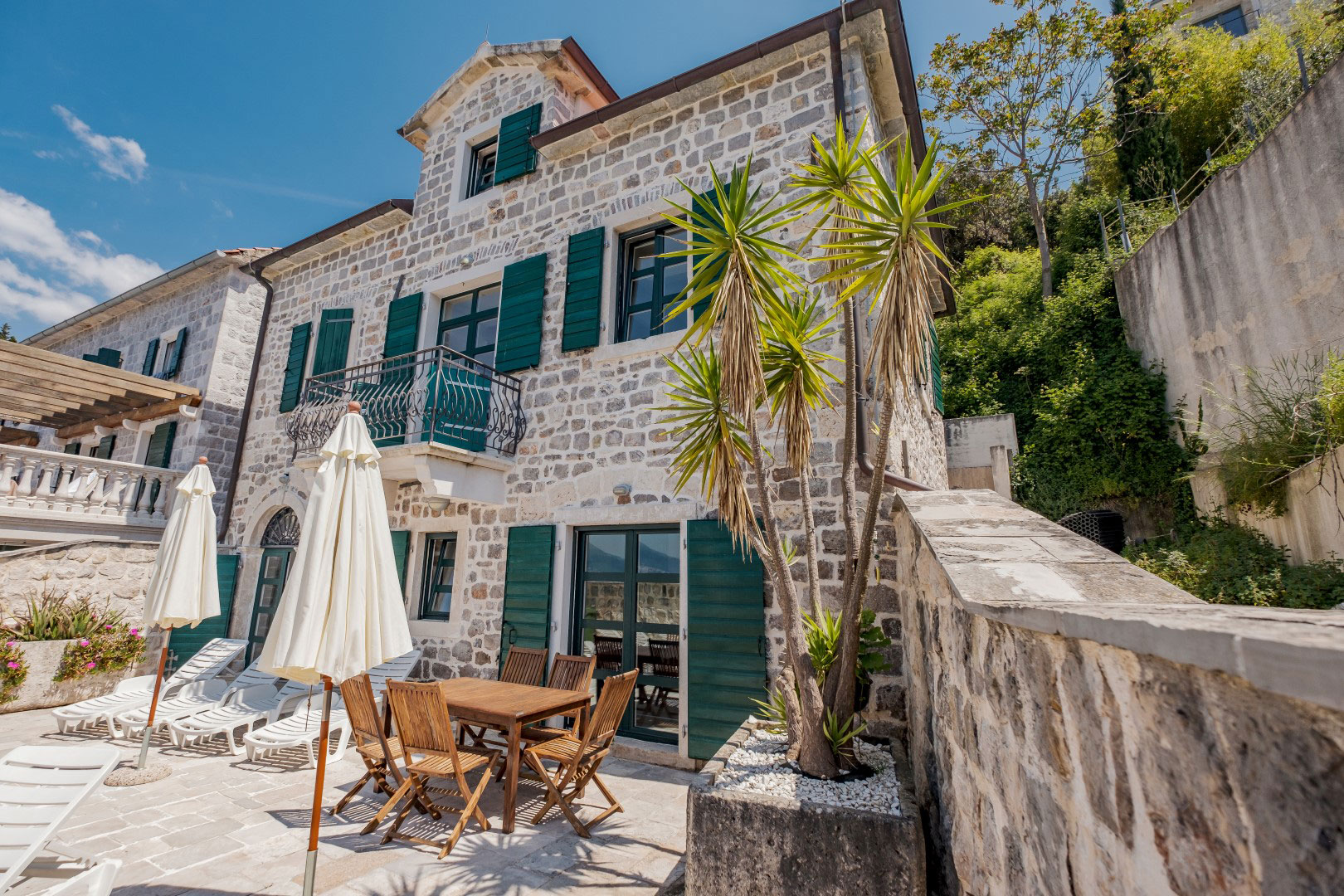
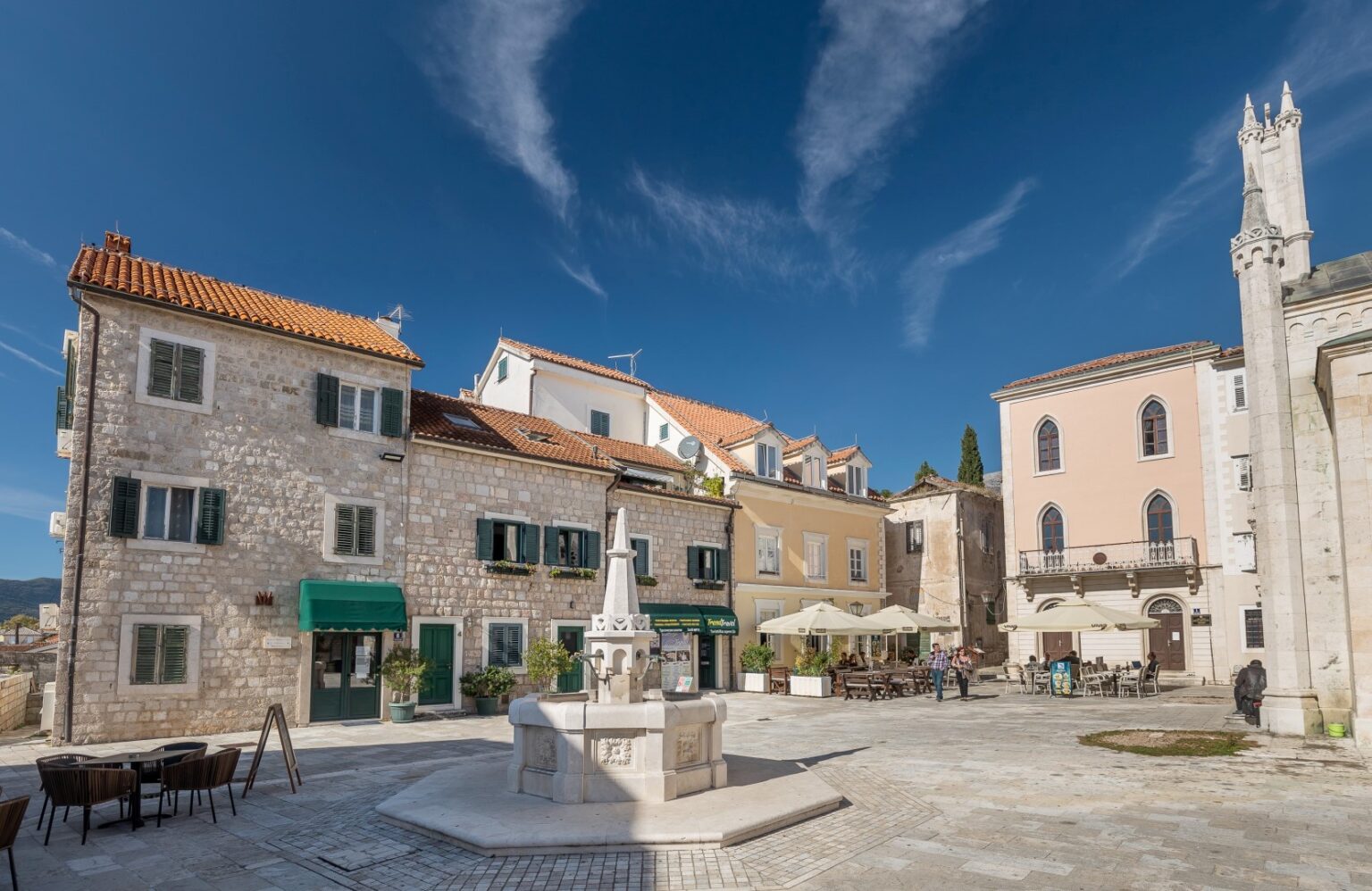
Venetian architecture in the town of Rose, one of the oldest settlements on the Luštica peninsula in the municipality of Herceg Novi, bears the stamp of Mediterranean charm and a rich history of Adriatic cultural heritage. During the long period of Venetian rule over the Bay of Kotor (from the 15th to the end of the 18th century), this small fishing village became an important strategic stronghold of Venice, which is clearly reflected in the architectural forms and urban structure that we still recognize today.
The houses in Rosa were built of local stone, with thick walls that ensured stability and thermal insulation. The roofs are covered with red Mediterranean tiles, and the windows are small, often with stone frames and wooden shutters, to protect them from the strong sun and winds from the sea. The facades are simple but elegant, often decorated with finely worked stone details.
The streets are narrow and winding, following the natural configuration of the terrain, which is characteristic of coastal settlements under the influence of Venice. The central squares and small harbors bear witness to the social life of the place, where trade, seafaring and the everyday life of the inhabitants came together. There were also smaller fortresses and guardhouses nearby that had a military function, which further highlights the strategic importance of Rosa during the Venetian period.
What makes Rose particularly attractive today is the combination of authentic Venetian architecture and untouched nature. Stone houses along the coast, small captain's villas and small churches preserve the spirit of the past, while the view of the entrance to Boka Kotorska reminds of centuries of maritime history and artistic influence that shaped this entire area. Inquaint stone villa Stara Pošta represents an excellent example of this unique combination of baroque and Montenegrin stone in the Mediterranean peace of Stari Rosa, close to Herceg Novi and Dubrovnik.
A legacy that lasts
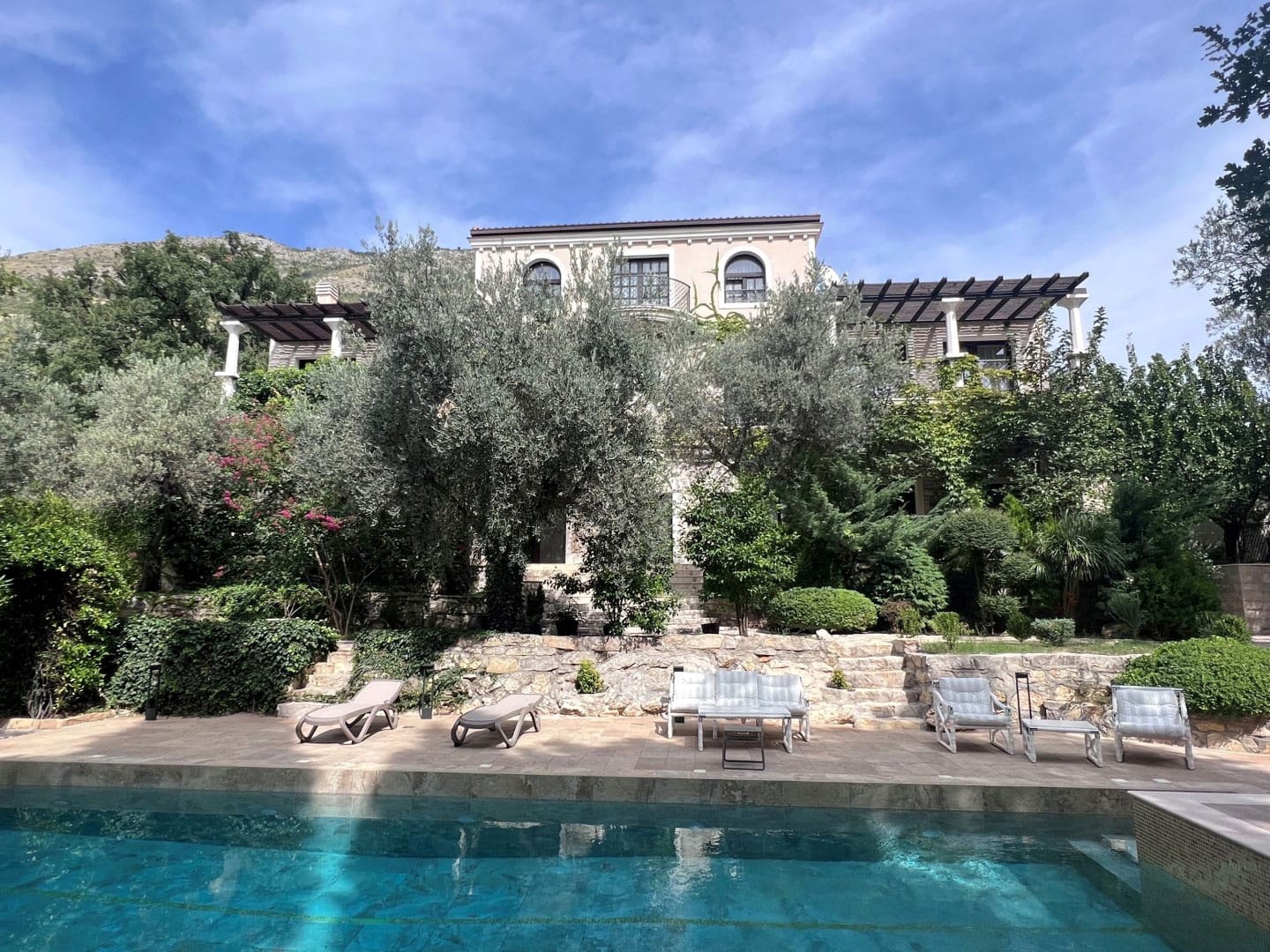
Today, when talking about luxury villas on the Montenegrin coast, many investors and architects find inspiration precisely in the Roman and Venetian heritage. A modern villa in Boka often reinterprets classical elements: stone walls, open terraces, arcades and a central courtyard. This continues a tradition that is more than two thousand years old — the tradition of a home that does not close, but opens space for man and nature, like this one authentic three-story villas in Reževići near Budva, whose the architecture seamlessly blends into the atmosphere of lush vegetation with centuries-old trees.
In Perast, Kotor, Risno, Herceg Novi or the Old Town and the surroundings of Budva, you will recognize architectural forms that you remember from walking in Venice or Dubrovnik, while every old palace tells of an era in which art, seafaring and religion were inseparable. And perhaps that is precisely why Montenegro, and especially the Bay of Kotorska, is one of the rare places in the Mediterranean where the Roman spirit and Venetian elegance still live — in stone, light and sea.