


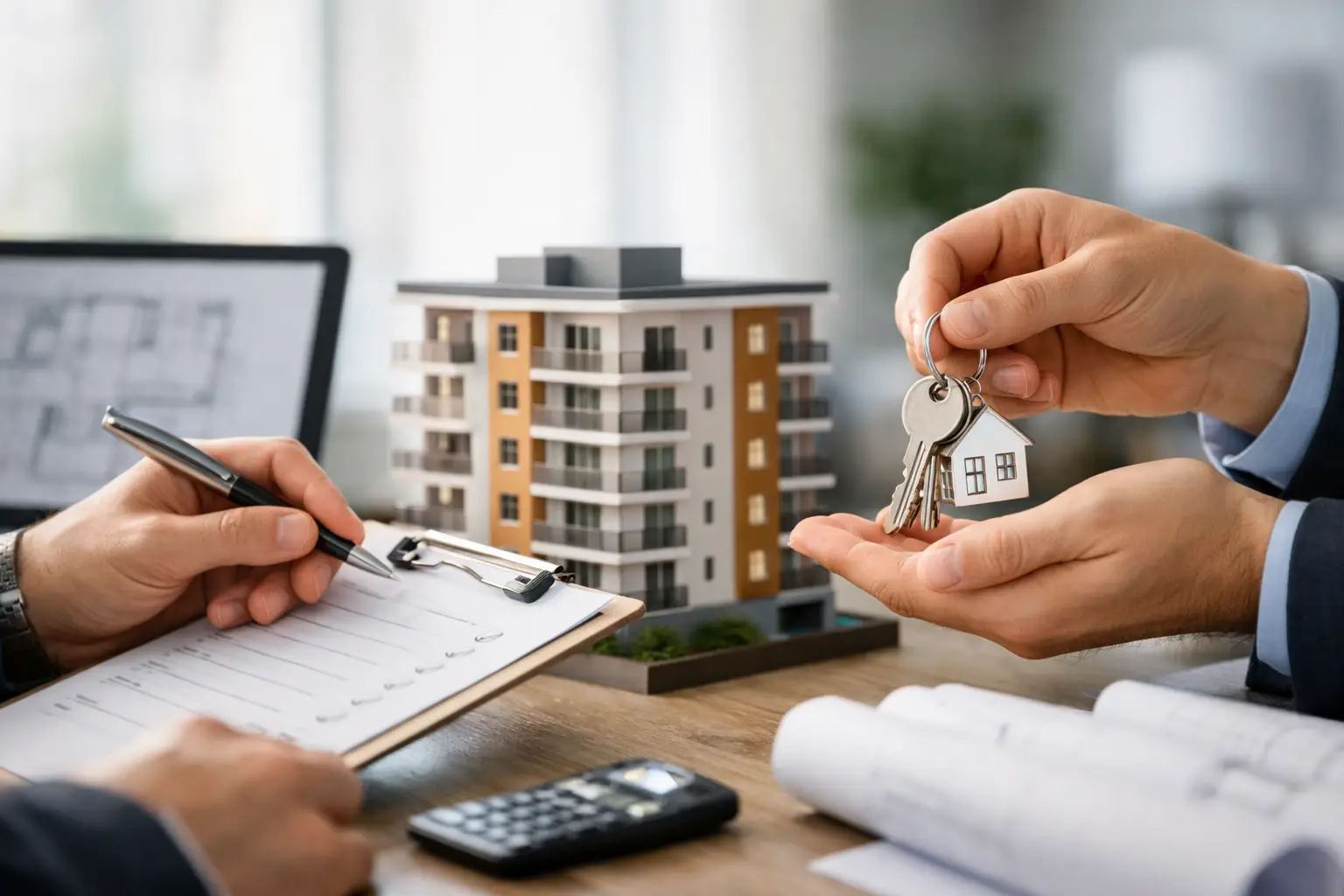
The first serious problem when buying an apartment usually doesn't arise when you see a poor layout or outdated tile. It arises when the apartment looks great, the location seems prestigious, and only later you discover that the paperwork isn't clean, the building has unresolved issues, or that the price was set without a solid basis. This is precisely why the question of what to check before buying an apartment is not a formality, but the key to a safe purchase.
For mid-range, upper-range, and premium apartments, mistakes are more costly, but the risks are no smaller with standard properties either. The only difference is that with a quality purchase, you don't just look at the square footage, but the complete picture – legal status, market value, quality of the building, future liquidity, and the actual cost of ownership.
What to check in the documentation before buying an apartment
The first thing is ownership. It is necessary to determine who is registered as the owner, whether the right of ownership is properly recorded, and if there are any encumbrances, liens, mortgages, or disputes. An apartment that at first glance seems like a good opportunity can become a long and expensive process if the legal status is not completely clear.
It is equally important to verify that the information in the documentation matches the actual conditions on the ground. Sometimes, the paperwork lists one square footage, while in reality, the apartment has been expanded, partitioned, or renovated without an adequate permit. Such situations are not always insurmountable, but they require extra attention and a risk assessment.
If you are buying a new-construction apartment, the focus also expands to include permits, the building's foundation, and the developer's status. It is not enough for the project to look presentable. You need to know if the construction was managed in accordance with regulations, what the developer's reputation is, and whether the deadlines, the standard of finish, and the contractual obligations are realistically backed up.
Location is not just an address
A good location is not the same as a popular location. An address may sound attractive, but a condo's value is determined by the broader context – access to transportation, privacy, noise, sun exposure, views, surrounding amenities, and future neighborhood development. In practice, an apartment in a quieter part of a quality micro-location often has a better long-term utility and investment value than an apartment with a prestigious address that is constantly crowded and offers limited comfort.
When buying for life, it's important to assess how the location functions every day, not just during a tour. What does the building's entrance look like during rush hour, is there enough parking, what is the sense of safety in the evening, and how close are schools, grocery stores, and healthcare services. When buying for investment, the broader demand is also considered – how liquid the location is for a future sale or rental.
On the coast, seasonal factors carry additional weight. A sea view is a premium feature, but you should also check noise exposure, traffic volume during the season, the quality of the access road, and the actual distance from the beach or marina. A property can look prestigious in photos but be operationally demanding for everyday use.
Quality of the building and the apartment itself
Many buyers pay too much attention to the interior and not enough to the building itself. An aesthetically pleasing apartment can hide mediocre construction, poor sound insulation, moisture problems, or low-quality common systems. That's why you need to look at the bigger picture – the facade, elevator, hallways, garage, entrance, maintenance, and the overall level of the building's finish.
Inside the apartment, pay attention to natural light, orientation, room layout, ceiling height, the quality of the carpentry, walls, and floors, as well as any signs of moisture, cracks, or subsequent interventions. For more luxurious apartments, the quality of materials and finishes must be in line with the price. If the premium price is based solely on the address, without corresponding quality of construction and equipment, there is a valid basis for negotiation.
In older buildings, the installations are checked more thoroughly. Electricity, water, drainage, heating, and air conditioning may look fine during a walkthrough, but that's precisely where future costs arise. An apartment that requires serious technical renovation isn't necessarily a bad buy, but in that case, the price must reflect the future investments.
The price of an apartment and its actual market value
One of the most common mistakes is equating the asking price with the actual value. A seller may have high expectations due to the location, view, or personal assessment, but the market doesn't reward all factors equally. That's why it's important to compare similar properties based on their neighborhood, floor level, building age, quality of construction, and level of amenities.
Be especially cautious with apartments advertised as an investment opportunity simply because they are in a popular area. Investment potential depends on several factors – the entry price, maintenance costs, rental demand, location stability, and future sale liquidity. Sometimes a more expensive apartment is a better investment, but sometimes the higher price just reduces the room for growth.
Buying an apartment isn't just a matter of whether you can afford it, but whether you're buying value that makes sense. An expert market assessment and negotiation strategy often make a bigger difference than an attractive initial discount.
Hidden costs that buyers often overlook
When it comes to what to check before buying an apartment, many buyers only think about the price and taxes. In practice, the total cost is broader. This includes notary and administrative expenses, any agency commission, costs for furnishing, renovation, a garage space, building maintenance, and future common investments.
In higher-end residential complexes, monthly maintenance fees can be significantly higher, but they often come with a higher level of comfort, security, and preservation of property value. This isn't a drawback in itself—but it must be clear before making a decision. A premium building without adequate maintenance quickly loses what made it special in the first place.
It is also necessary to check whether the apartment comes with a storage room, parking, or a garage space, and under what conditions. In listings, these items are sometimes assumed, but they are not always included in the contractual documentation in the way the buyer expects.
Neighborhood, building management, and everyday comfort
A good apartment isn't just what's inside its four walls. The quality of life is also influenced by the common areas, the building's management, and the neighborhood's layout. If the building is poorly maintained, or there are frequent issues with the elevator, noise, or shared facilities, it changes the living experience regardless of the interior.
It's worth finding out how the building is managed, whether there is regular maintenance, how up-to-date the common area payments are, and if there are any long-standing problems among the residents. This is especially important for properties with a large number of apartments and mixed-use buildings, where the usage dynamics can be completely different than in a traditional residential building.
When to buy for yourself, and when for investment
The same question doesn't have the same answer for every buyer. A family looking for a home should prioritize functionality, comfort, and the stability of the location. An investor will focus more on an exit strategy, profitability, and the profile of a future buyer or tenant. The problem arises when these two approaches are mixed up.
An apartment that's great for a vacation may not be ideal for year-round living. A property that's perfect for personal use may not provide the best rental return. That's why you should define your purchase objective before any viewing. Only then does it become clear what is truly essential and what is just a nice-to-have detail.
That's precisely where professional guidance makes a difference. On a platform like Nekretnia.me, the value isn't just in the access to select properties, but in the buyer gaining a clear perspective on the risk, value, and negotiating room before making a decision.
What to check before making a final decision
Before reserving or signing a contract, you should clarify all the facts: legal status, technical condition, price, deadlines, appliances that remain in the apartment, and all associated obligations. If anything is unclear, it's not a detail that will be resolved later on. In real estate, ambiguity often turns into a cost down the line.
A good apartment isn't necessarily the one that wins you over the fastest on the first tour. It's the one that remains a good choice when the emotion subsides, and only the numbers, documents, and a realistic picture of its future use are left on the table. When you buy thoughtfully, you're not just buying square footage—you're buying security, value, and a space that will justify your decision for years to come.