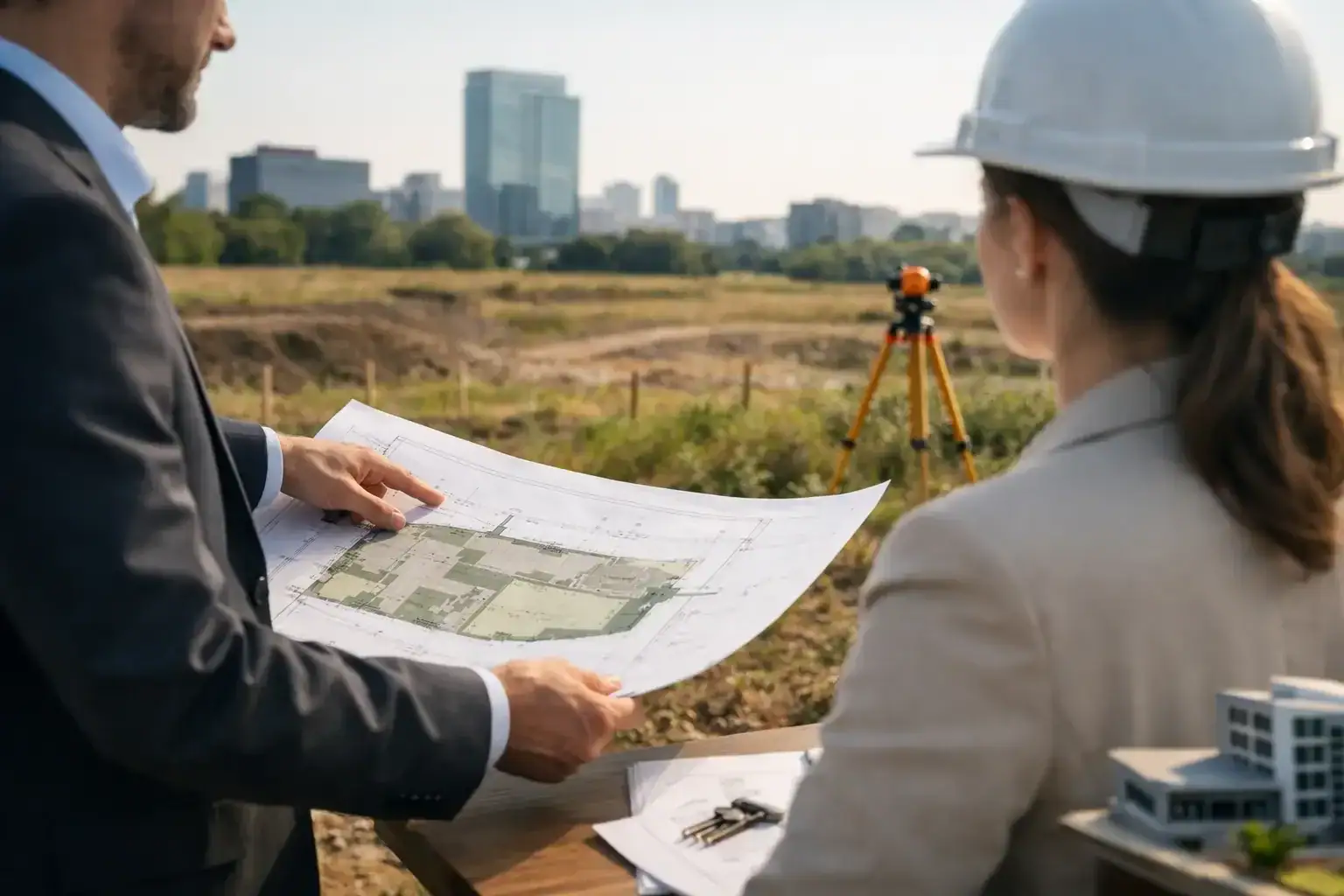



The most expensive mistake when buying real estate usually doesn't look dramatic at first glance. The apartment looks great, the location is in demand, the paperwork „seems in order,“ and deadlines push the buyer to decide quickly. This is precisely where a safe real estate purchase begins – not at the moment you fall in love with the view, but when you calmly check what exactly you are buying, under what conditions, and with what long-term consequences.
When buying an apartment, house, villa, or real estate investments, Security is not just a legal issue. It also involves correct market value assessment, understanding the location, construction quality, tax and procedural obligations, as well as assessing whether the property truly meets your goals. For some, family life is a priority, for some, a second home by the sea, and for some, yield and liquidity. Therefore, the same advice does not apply to every buyer.
What does it really mean to buy property safely
Secure real estate purchases mean entering the process with a complete picture, not assumptions. This includes verified ownership, alignment of factual and legal status, clear insight into any encumbrances, a realistic market price, and reasonable contractual terms. If any of these elements are missing, the risk increases – sometimes immediately, and sometimes only when you wish to use, renovate, rent out, or sell the property.
On the premium market, that principle is even more important. A higher price does not automatically guarantee a better legal status or a better investment. An exclusive location can carry exceptional long-term value, but only if all the foundations of the transaction are clean and if the price is aligned with the real potential of the property.
The first check isn't the price, but the legal status
Many clients first ask if there's room for negotiation. That is important, but only after a basic legal due diligence. First, it needs to be determined who is registered as the owner, if there are co-owners, encumbrances, lis pendens, mortgages, or restrictions on disposition. It is also important to check if what you see on the ground actually matches the documentation.
In practice, there is often a discrepancy between the advertised situation and the legally regulated one. A property might be attractive, renovated, and ready to move in, but a specific annex, terrace, garage space, or outbuilding may not be resolved as the buyer assumes. This doesn't always mean one should give up, but it certainly means that a decision should not be made without expert analysis.
When buying a new build, the focus is slightly different. It is then important to check the developer, the project phase, contractual obligations, the payment model, deadlines, and everything that affects the security of delivery and the later usability of the property. With older properties, the key question is more often the continuity of ownership, any encumbrances, and the condition of the building.
Location is more than an address
A good address attracts attention, but the true value of a location is only seen when you consider the broader context. For a family buyer, these are peace, access to amenities, privacy, and the quality of daily life. For an investor, demand, seasonality, tenant profile, future sales potential, and the location's resilience to market fluctuations are important.
Therefore, a secure real estate purchase means you are not just buying square footage, but also a future use scenario. Real estate in a prestigious location can be an excellent choice for capital preservation, but not every prestigious location is equally suitable for rental. Similarly, real estate with a more modest address can offer a better price-to-long-term usability ratio.
In coastal and premium zones, the view deserves additional attention, access to the sea or marina, urban environment, and the possibility that the character of the micro-location can change over time. The buyer often pays for precisely what cannot be easily replicated – an open view, privacy, close proximity to high-standard amenities, or limited supply in the desired zone.
How to recognize if a price is realistic
The asking price and market value are not the same. Sellers often set prices based on personal feelings, invested capital, or expectations, while the market reacts to location, condition, comparable offers, speed of sale, and buyer profile. Therefore, a serious buyer doesn't start by asking if they like the property, but rather if its price is justified.
Here, the nuance is important. Sometimes a higher price is justified because the property offers a rare combination of location, quality, view, and legal regularity. Sometimes, however, the same square footage on paper can hide a poor layout, low quality of finishes, or lower liquidity for future sale. Especially in the luxury market, value is determined not just by the size, but by the character of the property and its position within the niche market.
An investor-minded buyer should ask three questions: how easy it will be to sell the property later, how competitive it is for renting, and whether the location has sustainable growth potential. If there is no clear answer to these questions, an attractive listing by itself is not a sufficient reason to buy.
Technical condition often determines profitability
Legal documents can be in order, and the purchase can still be a bad one. The technical condition of the property directly affects costs, comfort, and future value. In older buildings Special attention should be paid to installations, moisture, carpentry, facade, roof, parking access, and common areas of the building.
In luxury real estate, buyers sometimes overlook this check because they are attracted by the interior, furnishings, or the impressive overall impression. However, premium finishes don't hold the same value if the underlying systems are weak or if property maintenance incurs disproportionately high costs. Aesthetics are important, but only after functionality.
If you are buying for vacation or seasonal use, you should also think about property management when you are not present. In that case, security is not just in the purchase, but also in subsequent maintenance, access to services, and the reliability of the property itself throughout the year.
The contract is not a formality, but a protection of interests
One of the most common mistakes is signing documentation assuming it's „standard procedure.“ The contract should clearly define the subject of the purchase, price, payment schedule, deadlines, handover method, responsibilities of the parties, and the consequences if any obligation is not met. The more valuable the transaction, the less room there should be for ambiguous wording.
Special attention should be paid to down payments, termination conditions, and deadlines related to documentation. It's not the same whether you are buying a ready-made property, a new construction in the building phase, or an investment project with a specific payment model. In each of these cases, the risk-reward ratio is different.
A buyer making a significant capital investment isn't just looking for a property, but for a process with predictable steps. That's precisely why expert support is important from the initial property viewing to the completion of the ownership transfer. A good transaction appears simple precisely because serious work has been done behind the scenes.
Why is an intermediary important when you want to buy property safely
In a regulated market, a quality real estate agent doesn't just open apartment doors. Their role is to filter offers, identify inconsistencies, assess negotiation potential, align buyer interests with market realities, and manage the process without unnecessary improvisation.
This is especially important when the buyer is not regularly present in the local market, buys from abroad, or enters the premium segment where the best opportunity is not always recognized based on advertisements. Sometimes the real value lies in the discretion of the sale, sometimes in a timely assessment of the project, and sometimes in having someone dissuade you from a property that seems attractive but carries too many open questions.
That's why serious buyers are looking for a partner who understands both the numbers, the procedure, and the location's profile. Nekretnina.me builds that kind of support precisely through a combination of market knowledge, negotiation experience, and full operational support during the purchase.
When is it worth waiting, and when is it worth reacting quickly
Not every good opportunity is an opportunity for delay. Quality properties in sought-after locations with proper documentation and a realistically set price don't remain without interest for long. If you have previously defined your budget, purchase goals, and criteria, a quick decision can be rational.
On the other hand, waiting makes sense when there are open legal issues, a mismatch between price and quality, or when the buyer is not yet sure if they are buying for living, vacation, or investment. These three purposes often look similar at first glance but lead to different choices. A property that is excellent for personal enjoyment doesn't have to be the best for yield. And vice versa.
Smart shopping is therefore neither impulsive nor infinitely cautious. It is informed. When you have clear data, the decision comes with more peace and much less room for expensive corrections later.
Buying property should bring security, a sense of control, and the satisfaction of having invested your capital thoughtfully. When every step is checked in a timely manner, property ceases to be a risk and becomes what it should be – a valuable foundation for life, vacation, or a sensible investment.